It is 2031. Aisha runs a mid-sized textile export business in Surat. She wakes to find her digital chief of staff has already drafted the week’s blog post, answered nine customer queries on WhatsApp, and flagged a supplier delay before her first cup of chai.
This is not science fiction. It is a straight line forward from one afternoon in 2026, when we connected Claude to our own WordPress blog for the first time.
A Morning Five Years From Now
Picture a business where the website, the inbox, the calendar, and the inventory system all speak the same language, and an AI assistant moves fluently between them. Nothing gets typed twice. Nothing waits in a queue overnight.
That world sounds distant. However, the infrastructure underneath it is being built right now, one connection at a time.
Why We Started With WordPress
We could have picked a more impressive first project. Instead, we connected Claude to our own blog, because the pitch made itself.
Everyone in the room already understood WordPress. Consequently, nobody needed convincing that an AI assistant reading and drafting posts was useful. The risk was low, the value was visible immediately, and the whole team could see the result within a single afternoon.
That ease of pitching matters more than it first appears. Ambitious AI projects often stall because nobody can picture the payoff. A blog, in contrast, is something everybody already understands.
The Compounding Logic Behind Small Connections
Here is the pattern we have noticed: each tool you connect does two things at once. It saves time today, and it teaches your organisation how to trust an AI with real work.
That second effect compounds. A team that has watched Claude draft, revise, and safely publish a blog post grows comfortable handing over the next task, then the next. Five years from now, the businesses ahead of the curve will not simply own more AI tools. They will have built an operating rhythm where delegation to AI feels ordinary.
Consequently, the real advantage of starting today is not the WordPress integration itself. It is everything your team learns about working alongside AI while building it.
From Our Blog to Aisha’s Chief of Staff
The Model Context Protocol connecting Claude to our WordPress site today is the same category of technology that will, eventually, connect Aisha’s AI assistant to her inventory, her supplier relationships, and her customer conversations.
The difference between now and 2031 is not the underlying idea. It is simply the number of connections, and the years of accumulated trust behind them.
Start With the Easiest Pitch in the Room
You do not need a five-year roadmap to begin. You need one connection that everyone in your business already understands, much like ours was.
Start there. Build the trust. Then, connection by connection, work towards the morning Aisha will eventually take for granted.
How do you give an AI agent access to your CRM, inventory system, and Google Docs without building a million custom integrations? You use the Model Context Protocol (MCP).
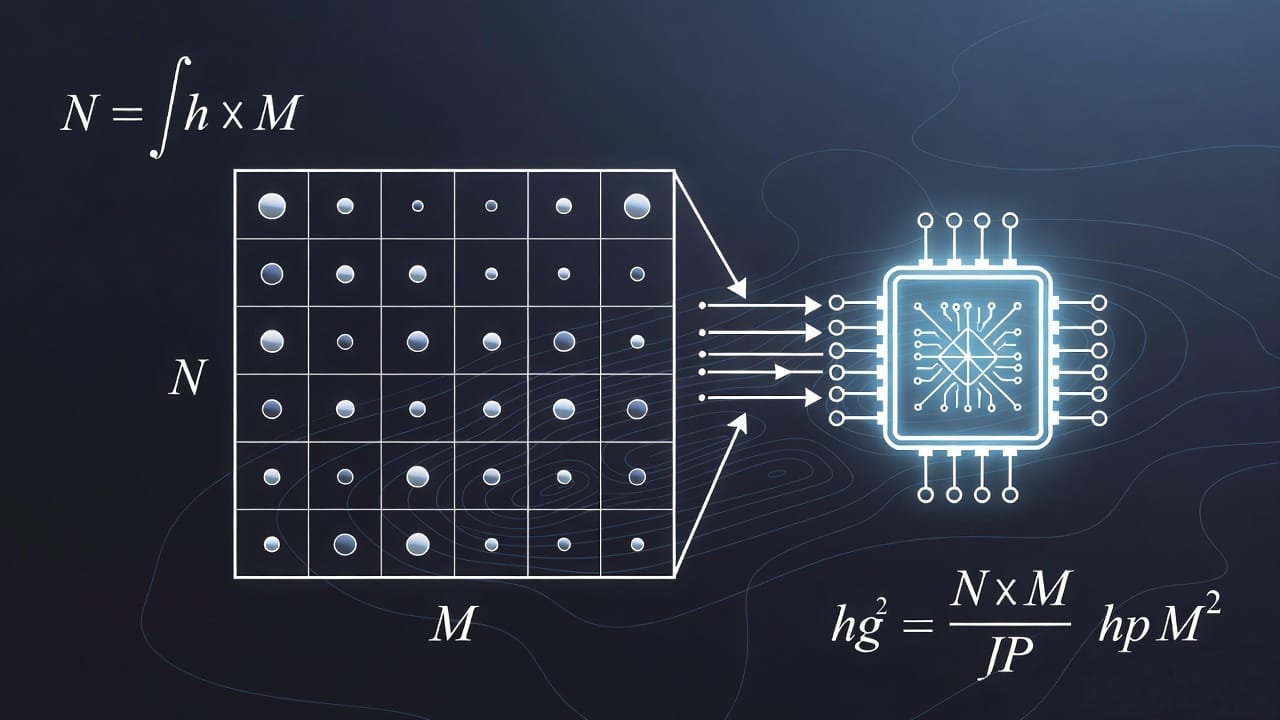
For decades, enterprises have wrestled with the “N×M integration problem”—connecting N applications to M data sources requires building N×M custom integrations.
However, Anthropic’s Model Context Protocol is changing this landscape by providing an open standard that enables developers to build secure, two-way connections between their data sources and AI-powered tools.
What Is the Model Context Protocol (MCP)?
The Model Context Protocol is an open-source standard for connecting AI applications to external systems. Think of MCP as a USB-C port for AI—instead of building separate connectors for every data source, developers now build against a single protocol.
The MCP architecture is straightforward. MCP Clients live inside AI applications and orchestrate information flow, whilst MCP Servers expose data and functionality from external systems. Consequently, AI models using Model Context Protocol can access your Google Calendar, generate applications using Figma designs, or analyse databases using natural language chat.
Why Model Context Protocol Matters: Solving the Integration Crisis
Before MCP, 10 AI applications connecting to 100 tools potentially required 1,000 different integrations. Model Context Protocol solves this by introducing a universal protocol—implement MCP once, and unlock an entire ecosystem.
MCP server downloads grew from approximately 100,000 in November 2024 to over 8 million by April 2025, reaching 97 million monthly SDK downloads (Python + TypeScript combined) by late 2025/early 2026, with over 10,000 active public MCP servers now available (directories show 8,243+ on PulseMCP and up to ~17,000–20,000+ across others like mcp.so and MCP Market).
Indian Enterprises Leading MCP Adoption
Major Indian IT giants are driving global Model Context Protocol adoption. TCS, Infosys, Wipro, and Cognizant collectively deployed over 200,000 Microsoft Copilot licences using MCP in December 2025, marking one of the largest enterprise AI rollouts globally. Furthermore, Infosys partnered directly with Anthropic to integrate MCP-powered agentic AI capabilities across their operations, whilst TCS announced a strategic collaboration with OpenAI.
These MCP deployments demonstrate substantial ROI. Microsoft described these firms as “Frontier Firms” for embedding AI into core operations across delivery, sales, finance, HR, and customer engagement. Moreover, employees report significant productivity gains when using MCP-powered agentic tools for complex workflows.
How Model Context Protocol Works
MCP operates through three fundamental building blocks:
Tools: Functions AI agents invoke to perform actions (creating CRM records, generating invoices)
Resources: Data sources AI agents read (documents, databases, API endpoints)
Prompts: Specialised instructions guiding AI behaviour for specific workflows
Moreover, MCP supports multiple transport protocols—STDIO for local processes and HTTP with SSE for remote cloud deployments—ensuring flexibility across deployment scenarios.
MCP Security and Governance
Model Context Protocol was designed with enterprise security in mind. The host instantiates clients and approves servers, allowing organisations to strictly manage what AI assistants access through MCP. Furthermore, MCP enables:
Granular permissions defining exact tool and resource access
Tool annotations marking “read-only” or “destructive” actions
Nevertheless, enterprises must remain vigilant. Security researchers identified issues including prompt injection and tool permission exploits. To address these concerns, organisations should build catalogues of approved MCP servers, implement AI gateways for additional security layers, and conduct regular security audits.
The Indian AI Market Opportunity with MCP
The timing for Model Context Protocol adoption couldn’t be better for Indian enterprises. India’s government launched a ₹10,000 crore (approximately ₹10,974 crore) AI mission to boost AI infrastructure and MCP adoption. Subsequently, agentic AI software spending is projected to reach ₹90 lakh crore globally by 2030, growing at 62.7% CAGR from 2025 to 2030.
Indian companies are well-positioned to capture this growth using Model Context Protocol. Over 80% of Indian organisations are actively exploring autonomous agent development with MCP, whilst India’s agentic AI market is estimated to reach ₹5,390 crore in 2026. Additionally, Indian IT companies collectively export technology services worth over ₹20 lakh crore annually, positioning them to lead global MCP enterprise AI adoption.
Implementing Model Context Protocol in Your Organisation
Adopting MCP complements existing infrastructure. Start with pre-built MCP servers for Google Drive, Slack, GitHub, and Postgres. Then identify high-impact Model Context Protocol use cases:
Customer Support: Connect AI agents to ticketing systems using MCP for automatic triage Data Analysis: Enable database queries through Model Context Protocol without SQL expertise Development Workflows: Access repositories via MCP through unified interfaces
Subsequently, build custom MCP servers for proprietary systems using available SDKs in Python, TypeScript, Java, C#, PHP, and Kotlin.
The Future of Business AI
The MCP ecosystem is experiencing explosive growth. OpenAI, Google DeepMind, Microsoft, and AWS have all embraced MCP, ensuring cross-platform compatibility. Indian enterprises are particularly well-positioned, given their scale, technical expertise, and strong client relationships globally.
Just as TCP/IP enabled the Internet to flourish, MCP is becoming the universal protocol enabling enterprise AI to reach its full potential. Indian IT leaders are already demonstrating this—with TCS, Infosys, Wipro, and Cognizant setting global benchmarks for agentic AI deployment.
Start small. Build one MCP server for a high-value use case. Experiment with pre-built servers. Learn what works. Then scale systematically. The new “TCP/IP” of business AI is here, and Indian enterprises are leading the way.
For the last two decades, e-commerce has been designed for human eyes: colourful banners, persuasive copywriting, and “Buy Now” buttons strategically placed to capture attention. However, a profound shift is underway. We are entering the age of agentic commerce—a digital economy where your next high-value customer may not be a human, but an AI shopping agent acting on their behalf.
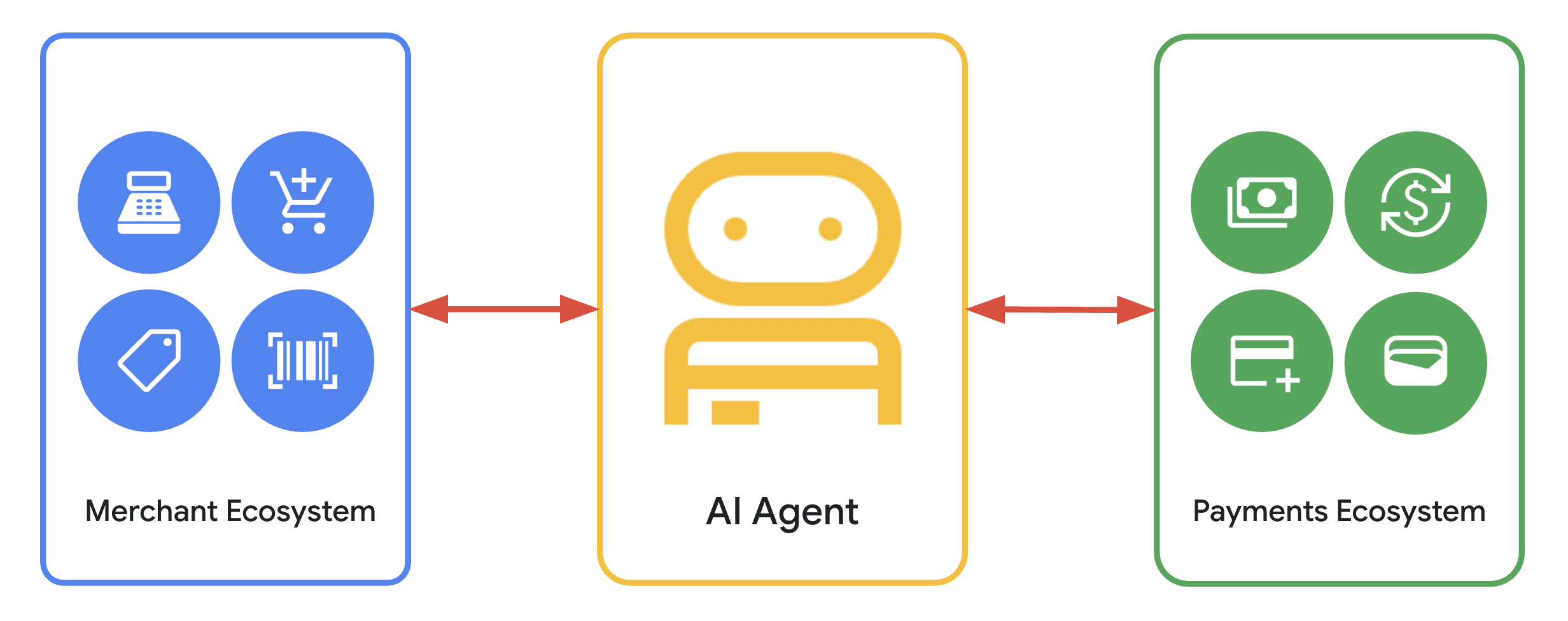
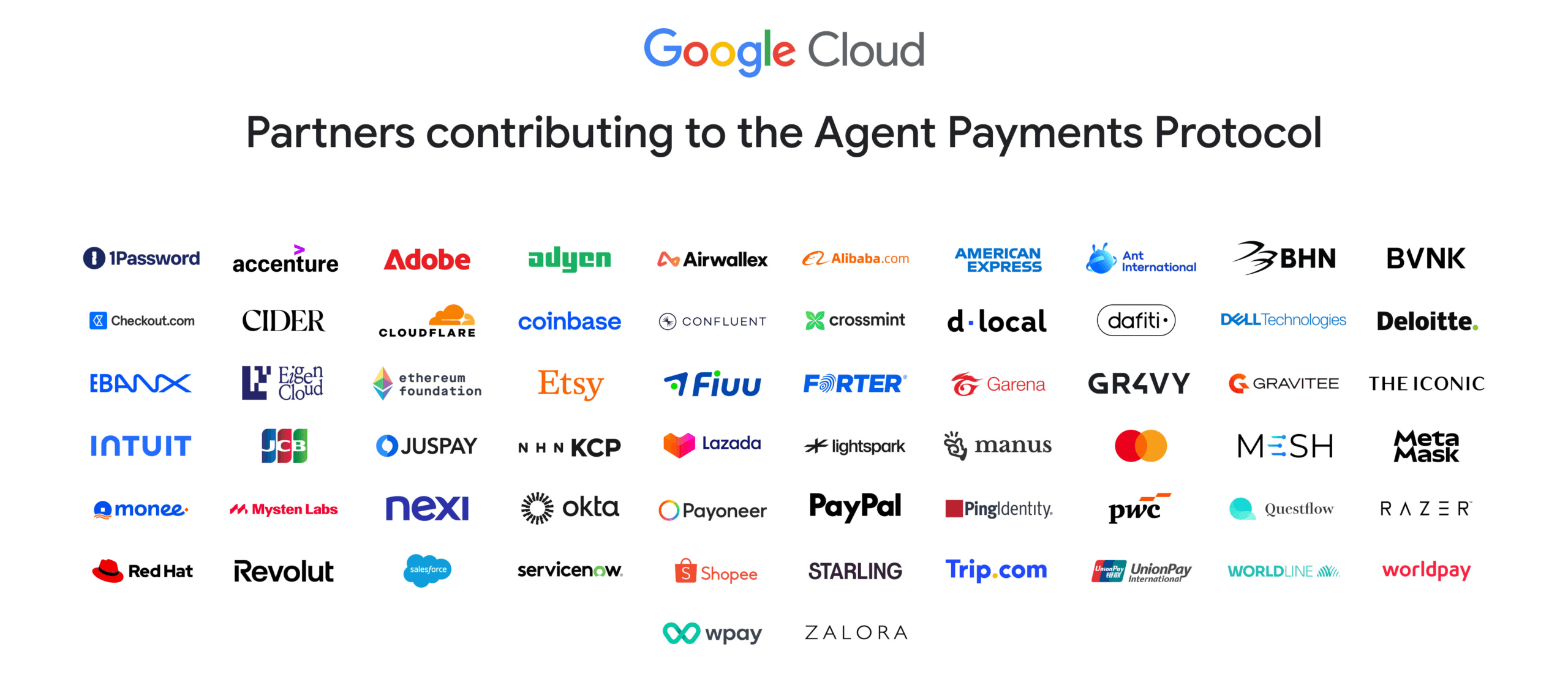
Google’s recent introduction of the Agent Payments Protocol (AP2) and its adoption of the Model Context Protocol (MCP) mark the beginning of this transition toward AI-powered e-commerce.
Especially for WooCommerce, Shopify and Magento merchants, understanding these concepts is no longer just technical trivia; it is the foundation of future business strategy.
This following article explains the new technologies, helping you prepare your business for the agentic AI shopping experience and the rise of machine shoppers.
The Agentic Customer: Understanding the AI Shopping Agent
To understand the tools, one must first understand the user. An AI agent is software that can reason, plan, and execute tasks autonomously. Unlike a passive chatbot that simply answers questions, an agent has “agency”—the ability to browse the web, compare prices, and, crucially, spend money on behalf of users.
In this new paradigm of agentic commerce, your e-commerce store is not just a destination for humans; it is a database for AI shopping agents. This requires a shift in how we optimise our online presence, moving from traditional SEO to Agent Engine Optimisation (AEO), also known as agentic SEO.
What is Agent Engine Optimisation (AEO)?
Traditional Search Engine Optimisation (SEO) is about ranking for keywords to earn a human click. Agent Engine Optimisation (AEO) is about structuring data so an AI can “understand” your product without ambiguity—a critical component of generative engine optimization.
AEO Focus: Logic and purity. (Exact weight, material composition, precise shipping windows, stock levels).
If your product data is trapped in “fluffy” marketing descriptions, an AI shopping agent may bypass your store for a competitor whose data is easier to machine-read. AEO ensures your store is the “path of least resistance” for an AI buyer in the emerging agentic commerce landscape.
The Universal Language: Model Context Protocol (MCP)
If an AI agent is visiting your store, how does it “read” your products? It does not look at your website’s visual theme. It looks for a standardised data stream. This is where the Model Context Protocol (MCP) comes in.
MCP is an open standard, adopted by Google and other tech leaders, that allows AI models to connect directly to data sources (like your e-commerce platform inventory) safely as well as securely—enabling true AI-powered e-commerce interactions.
The Concept of “MCP-UI” in Agentic Commerce
Despite the most disruptive concept for merchants in the agentic commerce era is MCP-UI. Currently, you expect customers to come to your website to shop. With MCP-UI, the “shopping experience” becomes portable through conversational commerce.
The Old Way: You find a pair of boots you like. You copy the link, paste it into the chat, and your friends click it. They are redirected to a browser, have to log in, search for their size, and navigate a 5-step checkout.
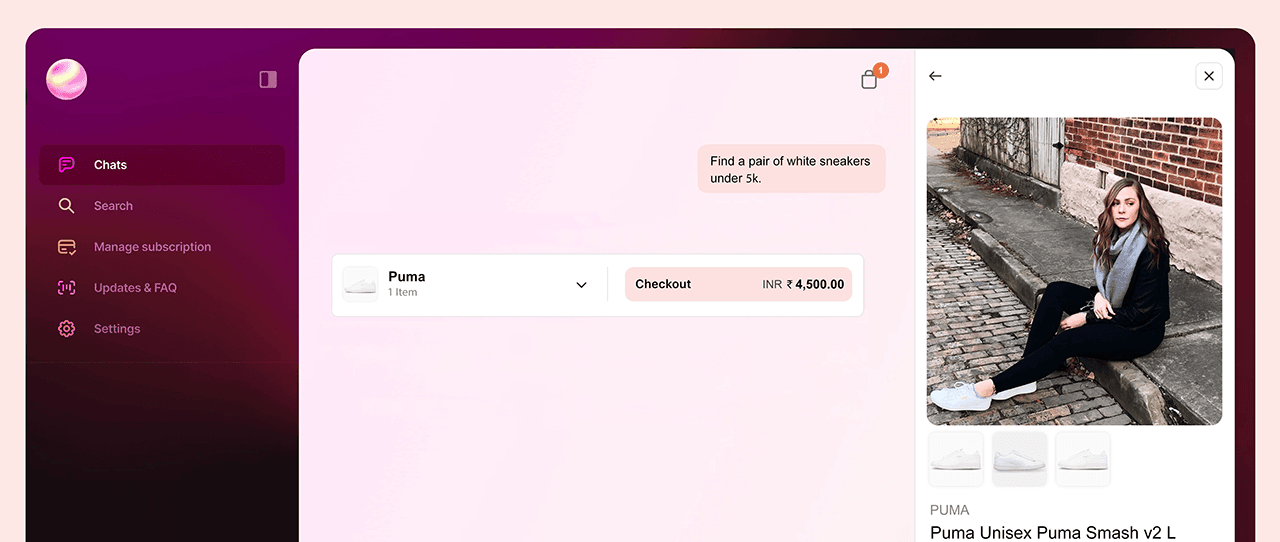
The MCP-UI Way (Agentic Commerce): You drop a line “Find me a pair of white sneakers under 5k.” into the chat. Because the chat app supports MCP-UI, a mini-version of the store’s interface renders directly inside the chat window through conversational commerce.
Imagine you are in a group chat on a platform like WhatsApp or Slack, discussing a hiking trip with friends.
Surprisingly, you or your friends can select their size, see real-time stock, and click “Checkout or Buy Now” using their saved chat credentials—without ever closing the conversation or opening a browser. The AI shopping agent handles the entire transaction seamlessly.
Your e-commerce website is no longer a showcase; it is a set of digital components that travel to the customer, powered by machine shoppers.
The Trust Gap: Google’s Agent Payments Protocol (AP2)
At the heart of agentic commerce is the ‘black box’ nature of complex algorithms. For machine shoppers to spend money at scale, humans must first believe that the underlying logic is not only secure but also consistently aligned with organisational interests and ethical standards.
How does a merchant know a bot is authorised to spend ₹5,000?
How does the user know the bot would not drain their bank account?
Undoubtedly, Google’s solution is the Agent Payments Protocol (AP2)—a cornerstone of secure AI-powered e-commerce.
AP2 is a standard that replaces the traditional credit card checkout form with a system of Cryptographic Mandates. Think of a mandate as a digital, tamper-proof letter of permission.
The Chain of Mandates in Agentic Commerce
The AP2 process works through a secure “handshake” that happens in milliseconds:
The Intent Mandate: Firstly, The human user tells their AI agent, “You are authorised to spend up to ₹5,000 on white sneakers shoes.” This creates a signed digital certificate.
The Cart Mandate: The AI shopping agent browses your e-commerce store, selects the items, and “locks” the price as well as the stock. It creates a secondary certificate linking the specific products to the user’s spending limit.
The Payment Mandate: Finally, the machine shopper presents the completed proof to your payment processor. The funds are released instantly.
Why This Matters for Merchants in Agentic Commerce:
Zero Fraud Liability: Because the mandate is cryptographically signed by the user’s device (e.g., their Google Wallet), it is mathematically impossible for the bot to “go rogue.”
Frictionless Checkout: There are no forms to fill out. The sale happens in the background, drastically reducing cart abandonment—a key benefit of AI-powered e-commerce.
The Agentic Commerce Shift: Optimising for Machine Intelligence
The transition to agentic commerce will not happen overnight, but the infrastructure is being laid now. To ensure your e-commerce business is ready for AI shopping agents and machine shoppers, focus on these three pillars:
Data Purity (AEO): Audit your product catalogue. Ensure attributes like size, colour, and dimensions are stored in structured fields, not just written in the description text. This is essential for agentic SEO and generative engine optimization.
API Readiness: Ensure your store’s REST API is robust. AI agents consume APIs, not HTML pages. Slow APIs will lead to agents “timing out” and abandoning your store.
Payment Evolution: Monitor your payment gateway providers (such as Stripe or PayPal) for updates regarding “AP2 support” or “Agentic Payments.” This functionality will likely be rolled out via plugin updates in the coming year.
Preparing for AI-Powered E-commerce: The Next Step for Your Business
The shift to agentic commerce represents a new revenue channel—one where the customer is logical, efficient, and ready to spend. As AI shopping agents and machine shoppers become the norm, businesses that embrace Agent Engine Optimisation, adopt conversational commerce through MCP-UI, and implement secure payment protocols like AP2 will gain a significant competitive advantage.
The future of retail is not just digital—it’s agentic. The question is not whether AI-powered e-commerce will transform your industry, but whether your business will be ready when agentic AI customers arrive at your digital doorstep.