Category: Blog

The Blog is the central hub for insights on digital design, development, online strategy and emerging web technologies. It brings together practical tutorials, opinion pieces, industry observations and hands‑on guides to help creators and businesses strengthen their online presence.

This section spans a broad range of topics — from website optimisation and performance enhancements to design thinking, user experience and platform updates. Its aim is to distil complex ideas into clear, actionable knowledge that can be applied immediately.

Whether you are learning a new skill, revisiting best practice, or keeping abreast of industry developments, the Blog provides context‑driven content grounded in experience. Articles are written with an emphasis on long‑term value rather than short‑lived trends.

  • WordPress 6.9: Era of Effortless Collaboration for Content Teams

    WordPress 6.9: Era of Effortless Collaboration for Content Teams

    The wait is over—WordPress 6.9 arrived, that ushers in a transformative era for the globe’s leading content management system. Emphatically, the culminating major release of 2025, this version delivers groundbreaking features designed to revolutionise team collaboration, optimise content workflows, and strategically pave the way for advanced AI-powered experiences. This article focuses exclusively on the WordPress 6.9 Content features applied to content team’s contributions. Meanwhile, the Abilities API and related AI features will be covered in a forthcoming article.

    WordPress 6.9 Content Features: Phase 3 & Real-Time Collaboration

    WordPress 6.9 proudly ignites Phase 3 of the Gutenberg project, placing real-time and asynchronous collaboration at the very heart of the editing experience. Certainly leading this revolutionary shift is Notes, a transformative feature that redefines how content teams ideate, review, and refine together—seamlessly within the familiar WordPress environment.

    Notes in WordPress 6.9 – Block-Level Comments That Transform Teamwork

    Imagine Google Docs-style collaboration, basically now native to the Block Editor. Eventually with Notes, feedback lives exactly where it belongs—attached directly to the specific block under discussion. No more scattered Slack threads, email chains, or third-party tools.

    Standout capabilities include:

    • Precision targeting: Pin comments to individual blocks for crystal-clear context
    • Threaded discussions: Replies and reactions keep every conversation organized and actionable
    • Resolvable threads: Close the loop with one click once feedback is implemented
    • Instant email notifications: Authors stay in the know the moment new input arrives
    • Zero external dependencies: Collaboration happens entirely inside WordPress—no plugins, no logins, no context switching
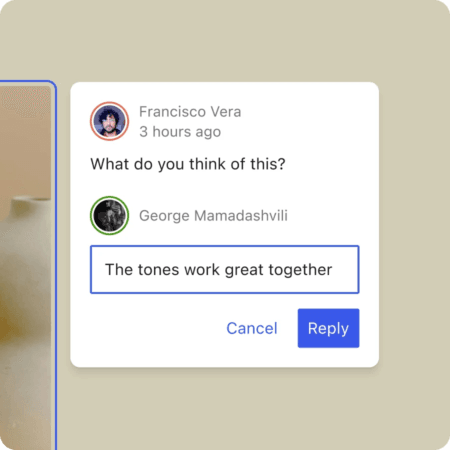
    WordPress 6.9 Content features: Notes

    Enabled by default on Posts and Pages, Notes can be extended to any custom post type via a simple register_post_type argument. For editorial teams, agencies, enterprises with compliance workflows, or globally distributed creators, this is the frictionless collaboration layer the community has dreamed of since Phase 1.

    New Blocks in WordPress 6.9 Content Features: Reduce Plugins, Boost Creativity

    WordPress 6.9 ships with an arsenal of sophisticated new core blocks that eliminate plugin bloat while unlocking entirely new publishing scenarios:

    Accordion Block
    Natively create elegant, collapsible sections—ideal for FAQs, product specifications, or structuring long-form content. Built-in anchor support means you can deep-link straight to any panel.

    It posted a single photo of “before watering” and now has 2.3M followers demanding hydration tips, drip-proof selfies, and a merch line called “I Survived My Owner’s Schedule.” The plant refuses to appear in stories without a ring light.

    Evidence shows a sponsored diet tea left crumbs leading to a foodie influencer’s account. The caption read, “Oops, I ate the batch—#NotSponsored.” Followers demanded a recipe; the dog provided alibis. PR team released a statement: “Cookies consented.”

    Perfect for FAQs, secret recipes, or finally shutting up that one relative who asks the same question every Thanksgiving. Expand! Collapse! Feel the power! Your visitors will think you’re organised. You’ll know you’re just really good at hide-and-seek.

    It started posting wake-up routines and now charges per snooze. Brand deals include “Sleep Shame” and a pillow that unfollows you for bad mornings. Followers vote on its morning playlist — currently dominated by passive-aggressive pop.


    Math Block
    Render beautiful mathematical notation using industry-standard LaTeX syntax. From research papers to educational resources and technical documentation, academic and scientific publishing finally feels at home in WordPress—both as standalone equations and inline expressions.

    C=client emails2soul remainingC = \frac{\text{client emails}^2}{\text{soul remaining}}
    t=3days+kmscreamingt = 3\,\text{days} + \sqrt{kmscreaming}
    P=16.9×10420(nice)P = \frac{1}{6.9 \times 10^{420}} \quad \text{(nice)}

    Time-to-Read Block
    Automatically calculate and display estimated reading time, giving visitors instant context and boosting on-page engagement metrics.

    5–8 minutes

    Terms Query Block
    Dynamically list taxonomy terms with full design control—empowering theme authors to craft smarter archives, faceted navigation, and content discovery experiences.


    Comment Count & Comment Link Blocks
    Granular comment controls are now first-class blocks, letting designers place and style comment triggers exactly where they make the most impact.


    Stretchy Text (Fit Text)
    Paragraph and Heading blocks gain a breathtaking “Fit Text” option that automatically scales typography to fill its container. Achieve magazine-style responsive headlines and hero text that adapt flawlessly across breakpoints—no custom CSS required.

    Loading motivation……………(0%)

    By visiting this website you agree to give us your Netflix password, all future tax refunds until 2077, and the last slice of pizza in your fridge right now. 😀


    Top WordPress 6.9 Content Features for Faster, Smarter Workflows

    Direct Drag-and-Drop
    Say goodbye to tiny drag handles. Click anywhere on a block and move it effortlessly—the editor now truly behaves like a professional page builder.

    WordPress 6.9 Content features: Drag-n-drop

    Hide Blocks from Frontend
    A game-changing visibility toggle lets you conceal blocks during live viewing while keeping them fully editable. Perfect for:

    • Pre-scheduling seasonal promotions
    • Drafting major updates without duplicating pages
    • A/B testing layouts safely
    • Temporarily pausing content without permanent deletion

    Future releases will evolve this into sophisticated conditional display rules based on device, user role, geography, and more.

    Expanded Command Palette
    The lightning-fast Command Palette (Ctrl/⌘ + K) is no longer limited to the Site Editor—it’s now available dashboard-wide. Jump to any admin screen, create content, or execute actions in a fraction of the usual clicks.
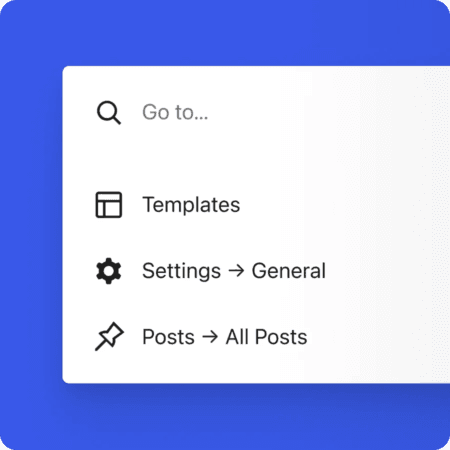
    WordPress 6.9 Content features: Command palette

    Simplified Site Editor
    A new streamlined mode delivers quick content-focused editing for marketers and writers, while preserving unrestricted creative power for designers and developers. The best of both worlds, without compromise.

    Smarter Template Management
    Complex multisite and multi-template workflows become intuitive. The revolutionary Allowed Blocks interface moves block restriction rules from PHP filters into a clean visual UI—empowering administrators to enforce brand and security standards without writing a single line of code.

    WordPress 6.9 isn’t just an update—it’s the foundation of a bolder, more collaborative future. Phase 3 has officially begun, and the possibilities for teams, creators, and publishers have never been more exciting. Welcome to the new era of effortless collaboration.

    What’s Cooking After 6.9?

    WordPress 6.9 is the kind of release that makes you smile and get back to work—because everything just feels better.

    Collaboration has just advanced in the most human way possible. Notes bring the warmth of sticky notes into the digital workspace, allowing teams to leave feedback that remains perfectly in sync, regardless of how many people are drafting simultaneously. It’s simple, delightful, and already saving hours on every multi-author site I’ve worked on. Phase 3 is no longer “coming someday”—it’s unfolding beautifully, one thoughtful feature at a time.

    And the editor? WordPress 7.0 will finally complete the full iframe-free transition, meaning the Site Editor and post canvas will look and behave exactly like your front end. Years of quirky stylesheet conflicts and “it works on the front end but not in the editor” frustration are gently retiring. This is WordPress keeping its promise that what you see while editing is what your visitors will see—pixel-perfect, every time.

    The Part That Actually Matters

    This release is pure joy in motion.

    • Notes make team workflows friendly again.
    • The new Layout Grid and improved Cover blocks enable richer designs with fewer plugins.
    • Performance gains make every site feel snappier.
    • Site Editor improvements are so smooth you’ll enjoy using them.
    • WordPress 6.9 isn’t chasing trends. It’s listening to creators, developers, agencies and site owners — then delivering precisely what was requested, polished and ready.
    • This is the platform at its best: mature, confident and still genuinely excited to improve your day.

    Update when you’re ready — you’ll love it. WordPress isn’t just keeping up with the future; it’s building the future we want to live in — one joyful, practical release at a time.
  • New Jetpack Statistics: Paid for Commercial Sites – Downsides and Alternatives

    New Jetpack Statistics: Paid for Commercial Sites – Downsides and Alternatives

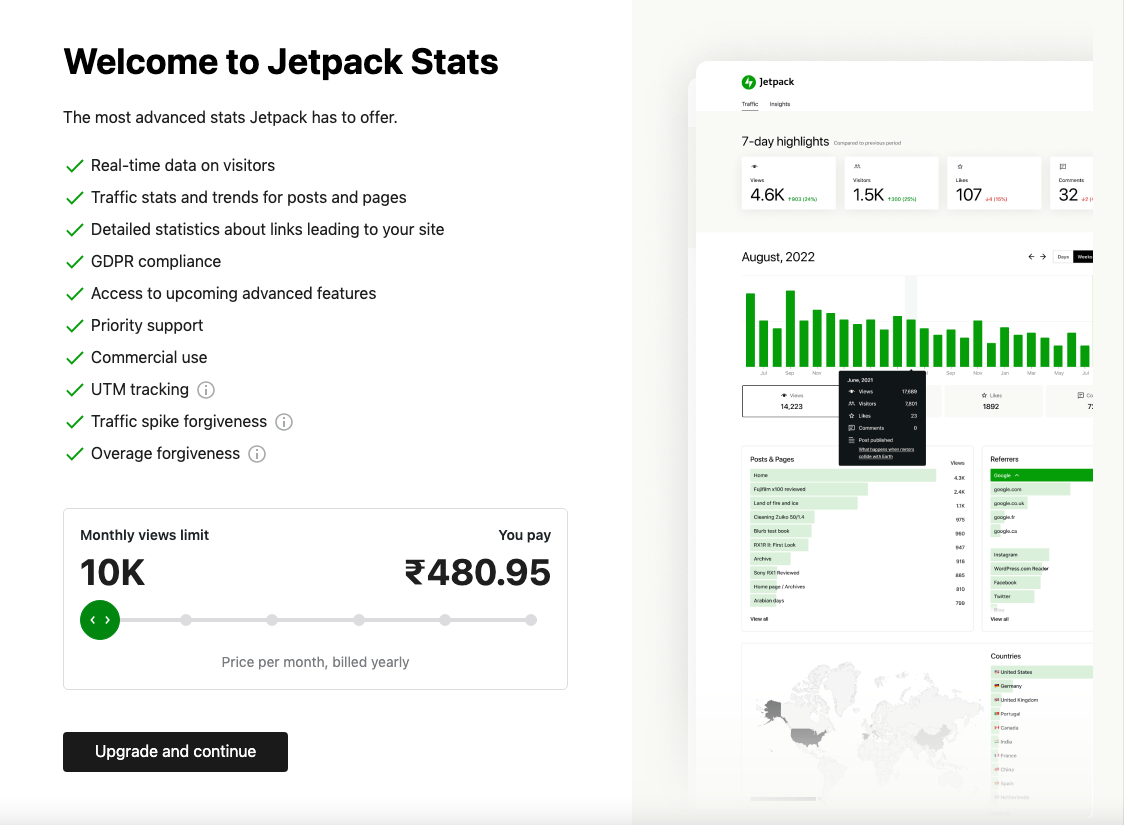
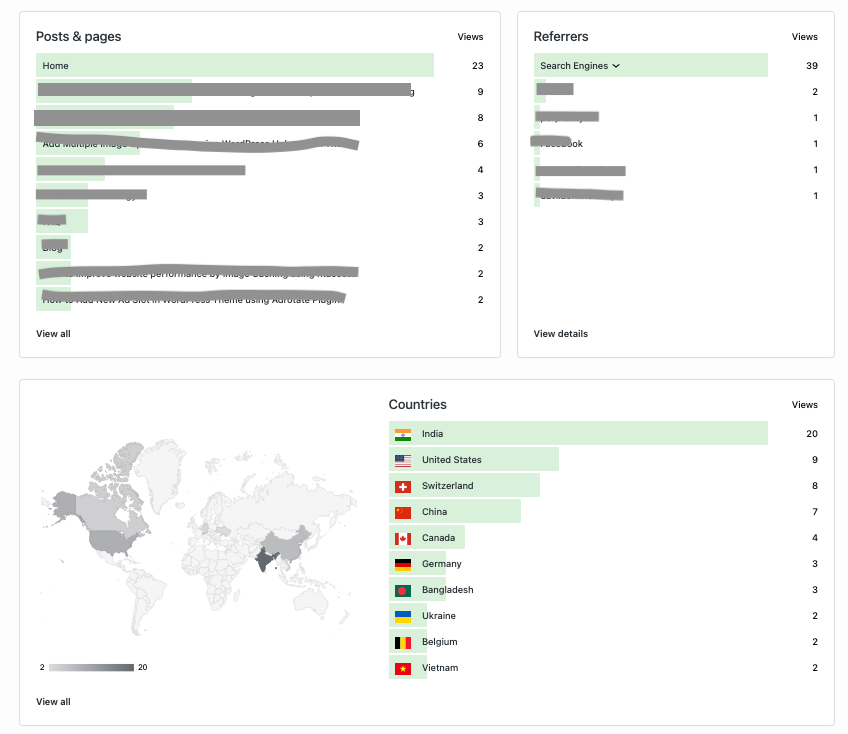
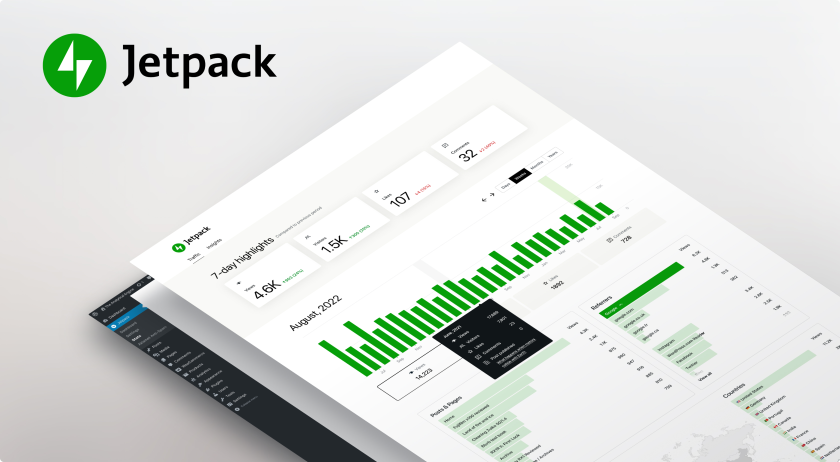
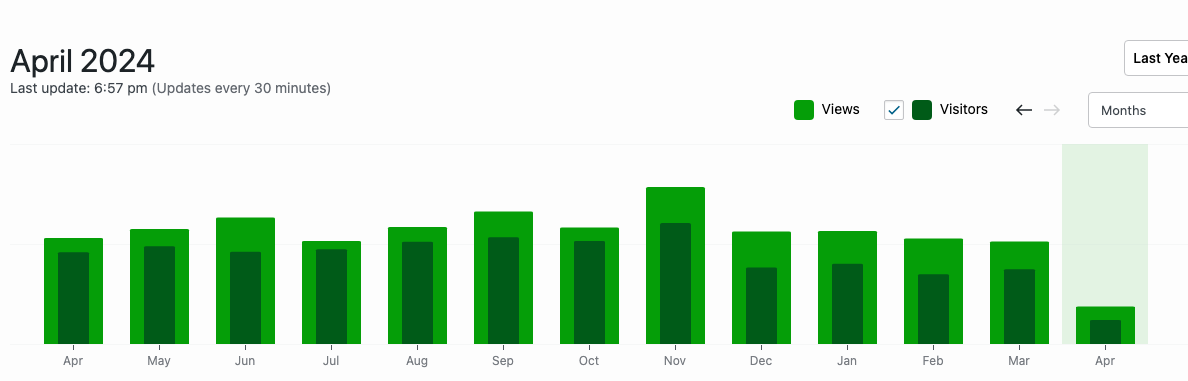
    Jetpack is a popular WordPress plugin that offers a wide range of features to enhance the functionality and performance of your website. One of the features that Jetpack offers is its Stats module, which provides valuable insights into the traffic and engagement on your site. Today, it’s forced to a Paid Only feature for all the Commercial Sites, most commonly the e-Commerce platforms, service providers or any potential site that is generating revenues. Technically, if your website can escape their algorithm that is intent to “Making Money from a WordPress Site” then its a Personal Site Stats & FREE forever (that too only time will tell).

    Let’s quickly check the downsides and alternative to Jetpack Statistics feature.

    Downsides of the New Jetpack Statistics

    While the free version of Jetpack Stats can be useful, the paid feature comes with its own set of downsides that are worth considering.

    Limited Data and Insights

    One of the main criticisms of the Jetpack Stats paid feature is its limited data and insights. While the free version provides basic information about your site’s traffic, the paid feature offers more detailed analytics and metrics. However, these insights are still not as comprehensive as those provided by dedicated analytics tools like Google Analytics and Microsoft Clarity.

    With the Jetpack Stats paid feature, you may find yourself missing out on important data points that could help you make informed decisions about your website. For example, you may not have access to detailed demographic information about your visitors or the ability to track specific user actions on your site. Or if you need a detailed segmented report of organic traffic vs the demographic region & technology.

    Costly Subscription Model

    Another drawback of the Jetpack Stats paid feature is its costly subscription model. While the free version of Jetpack is available to all WordPress users, the paid features, including the Stats module, require a monthly or yearly subscription. This can be a significant expense for individuals or small businesses with limited budgets.

    Furthermore, the cost of the Jetpack Stats paid feature may not be justified for many website owners. As mentioned earlier, there are other analytics tools available, such as Google Analytics, that offer more comprehensive features and insights for free. Paying for the Jetpack Stats feature may not be a wise investment when there are better alternatives available at no cost.

    Lack of Customisation Options

    One of the limitations of the Jetpack Stats paid feature is the lack of customisation options. While the module provides some basic insights, it may not allow you to tailor the data to your specific needs. This can be frustrating for website owners who want to track and analyse specific metrics that are relevant to their business or industry.

    Additionally, the Jetpack Stats paid feature may not integrate seamlessly with other analytics tools or plugins that you may be using. This lack of compatibility can make it difficult to get a complete picture of your website’s performance and may require additional time and effort to manually consolidate data from different sources.

    Alternatives to Jetpack Stats

    While Jetpack is a popular plugin with many useful features, the paid version of its Stats module has its downsides. The limited data and insights, costly subscription model, and lack of customisation options make it a less attractive option compared to other analytics tools available in the market.

    Before deciding to invest in the Jetpack Stats paid feature, it is recommended to explore other alternatives and evaluate their features, cost-effectiveness, and compatibility with your website. It’s important to choose an analytics solution that provides comprehensive insights and meets your specific needs without putting a strain on your budget.

    Google Analytics & Site Kit by Google (Recommended)

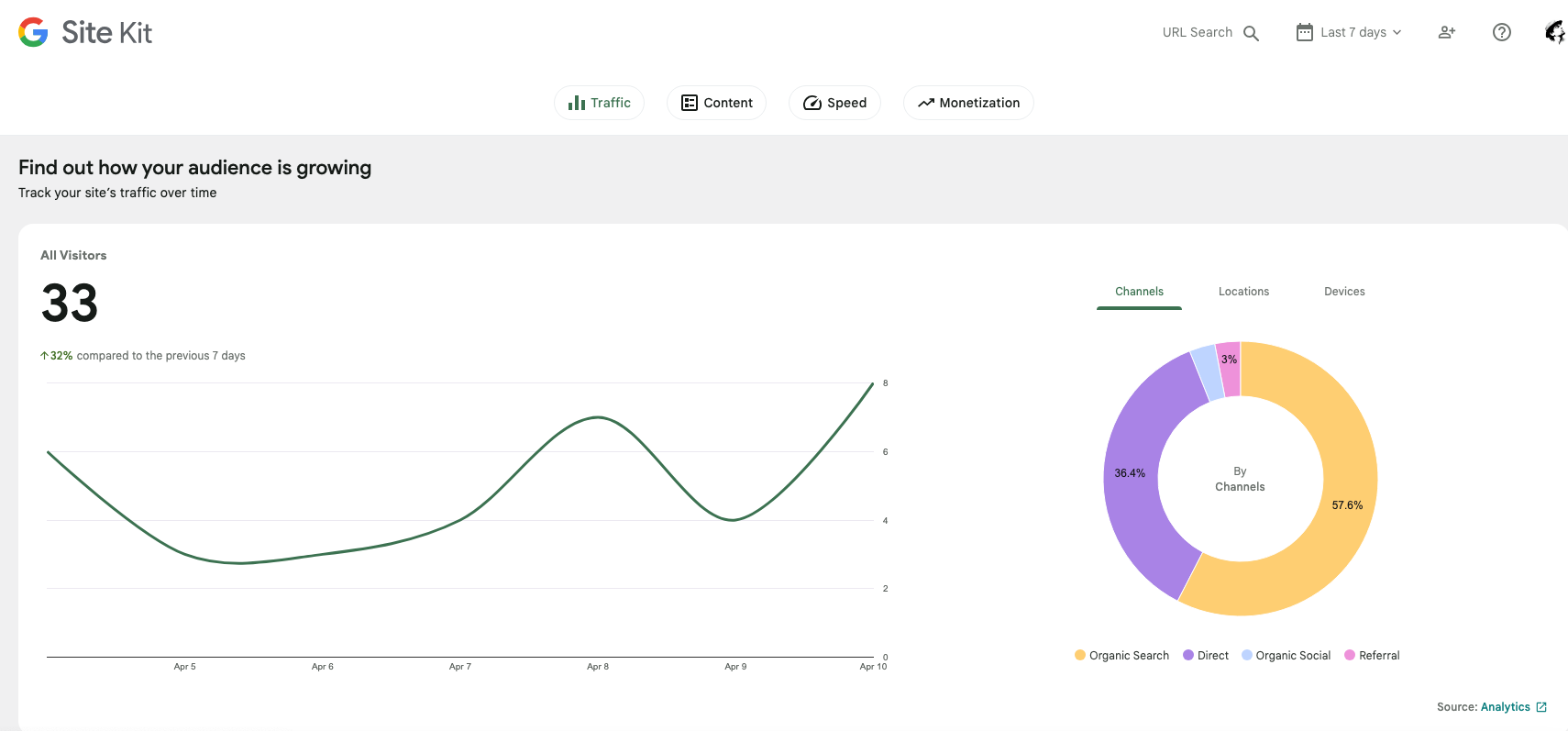
    Site Kit by Google is a WordPress plugin that provides insights from various Google services directly in your WordPress dashboard. It seamlessly integrates with the services like Google Analytics, Search Console, AdSense, and PageSpeed Insights, offering website owners a comprehensive overview of their site’s performance, audience behaviour, revenue generation, and SEO insights.

    We have already recommended most of our clients that are having issues with Jetpack Stats subscription model and do not wish to pay heavy subscriptions. This is the best alternative along with enough website statistical information.

    Criticism over Jetpack Stats

    Jetpack is bloatware, f**k them. If you analyse a basic WordPress site and one with jetpack, like a static comparison you will see a huge difference on how they behave and much resources the jetpack one eats up (ram/cpu).

    Ah yeah, you will be back soon. Everything out there nowadays are paid and subscription stuffs.

    At least Hello Dolly is still free. The day they start charging for it is the day I’m leaving WP.

    That’s pretty much it. In case you have any questions to ask, do leave a comment below.

  • Submit & Publish Flutter App on Google Play Store

    Submit & Publish Flutter App on Google Play Store

    Flutter Platform is a trending solution for startups with cost effective investment. Because, it lets you develop an Application for multiple platforms like Android, iOS, MacOS, Linux or Web with an expense of single business logic. So, in this tutorial we will build and Submit Flutter App on Google Play Store for review.

    Submit Flutter App on Google Play

    Review AndroidManifest.xml

    Firstly, it involves to review App manifest file or AndroidManifest.xml file which is located in the android > app > src > main folder of the flutter app. Let’s review the following:

    Review App Title or Label

    Edit the android:label to change the default title of the application:

    <application
            android:name="io.flutter.app.FlutterApplication"
            android:label="My Cool App"
            android:icon="@mipmap/ic_launcher">

    Add User Permissions (if any)

    Add various permissions that an application require from the user. Such as internet, notifications or vibration etc.

    <manifest xmlns:android="http://schemas.android.com/apk/res/android" package="com.thecreatology.mycoolapp">
    
        <uses-permission android:name="android.permission.INTERNET"/>
        <uses-permission android:name="android.permission.RECEIVE_BOOT_COMPLETED"/>
        <uses-permission android:name="android.permission.VIBRATE" />
    
        <application
            android:name="io.flutter.app.FlutterApplication"
            android:label="My Cool App"
            android:icon="@mipmap/ic_launcher">

    Launcher Icons & Splash Page

    Generate Launcher Icons Natively

    Using the flutter_launcher_icons package lets you update the Flutter app’s launcher icon natively. By natively, it means that working within the scope of flutter set the launcher icons for Android as well as iOS.

    • Open pubspec.yaml and add flutter_launcher_icons as a dev_dependency:
    dev_dependencies:
      flutter_launcher_icons:
    
    flutter_icons:
      image_path: "assets/images/app_icon.png"
      android: true
      ios: false
    • Also make sure to add app_icon.png in the assests/images directory in the root of Flutter App.
    • Then do a Pub Get or type flutter pub get in the terminal window from Flutter App root directory.
    • Finally type flutter packages pub run flutter_launcher_icons:main to generate icons as per the configuration defined in pubspec.yaml file.

    Generate Splash Screen Natively

    Similarly, flutter’s default splash screen is a simple white screen, which is not impressive at all. Therefore and based on the same theory as the above launcher icons, you can generate a splash screen for your flutter app natively. Using the flutter_native_splash package lets you update the Flutter app’s splash screen natively.

    Open pubspec.yaml and add flutter_launcher_icons as a dev_dependency:

    dev_dependencies:
      flutter_native_splash:
    
    flutter_native_splash:
      image: assets/images/splash.png
      color: "#cccccc"
    • Also make sure to add splash.png in the assests/images directory in the root of Flutter App.
    • Then do a Pub Get or type flutter pub get in the terminal window from Flutter App root directory.
    • Type flutter pub pub run flutter_native_splash:create to generate and set splash screen for both Android and iOS as per the configuration defined in pubspec.yaml file.

    Go to the next page to submit flutter app on Google Play

    Pages: 1 2

  • WordPress 5.5 Updates with Sitemap, Speed, Security & New Block Editor Patterns

    WordPress 5.5 Updates with Sitemap, Speed, Security & New Block Editor Patterns

    WordPress 5.5 updates released yesterday, 11th August 2020, is in the honour of Billy Eckstine. This updates acknowledges the 4Ss, that is Simple, Speed, Security & Search. Loading speed and cyber security are the major factors that concerns most of us when we think of launching a WordPress site. But this WordPress update 5.5 could be a game changer. Yes, a well optimised WordPress website does not require expensive server resources or premium website hosting like Siteground.

    WordPress 5.5 Features

    PageSpeed Optimisation with Lazy Load

    50-70% of a page size depends upon the media like images, videos or fonts. The WordPress update takes care of image using the lazy load. When the viewport paints in the browser, the lazy feature loads the image. This feature is already available in Jetpack Plugin, but WordPress claims to have it added by default in the self-hosted solution. Very caring of Automatic!

    Inbuilt Sitemaps for SEO

    WordPress finally adds in-built Sitemaps to help a website appear in Search engines, the moment you publish them. It’s funny to believe that after a decade, finally WordPress has a default XML Sitemap that helps the search engine crawlers to discover posts and pages on the website.

    Automatic Updates for WordPress Themes & Plugins

    WordPress 5.5 Update | Auto Update Plugins
    WordPress 5.5 Features Auto Update Plugins

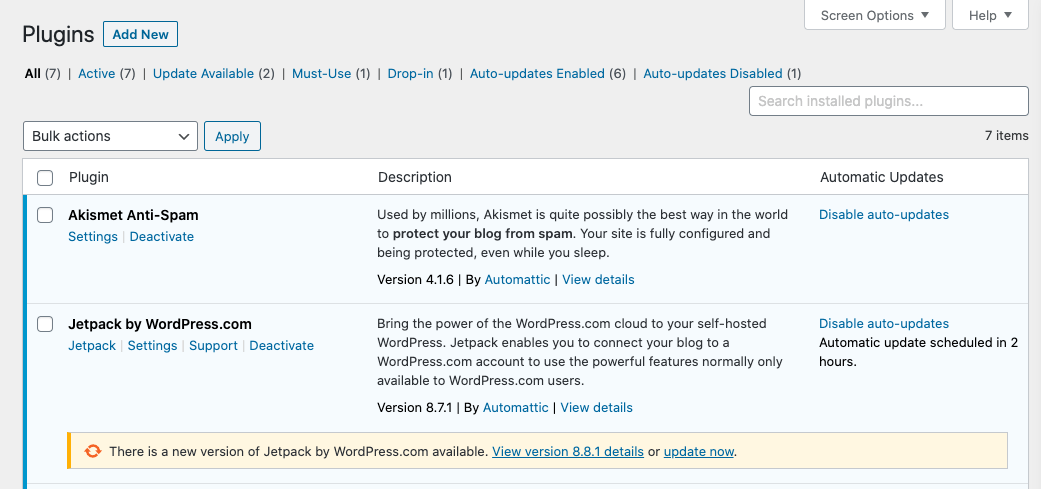
    WordPress 5.5 feature adds a new column in plugin list, as Automatic Updates. So, with a press of a button to enable auto-updates, schedules a cron job after 2 hours. If you’re already using this feature from WordPress.com Manage Sites, then the same setting should apply in the dashboard.

    New Block Editor with Patterns

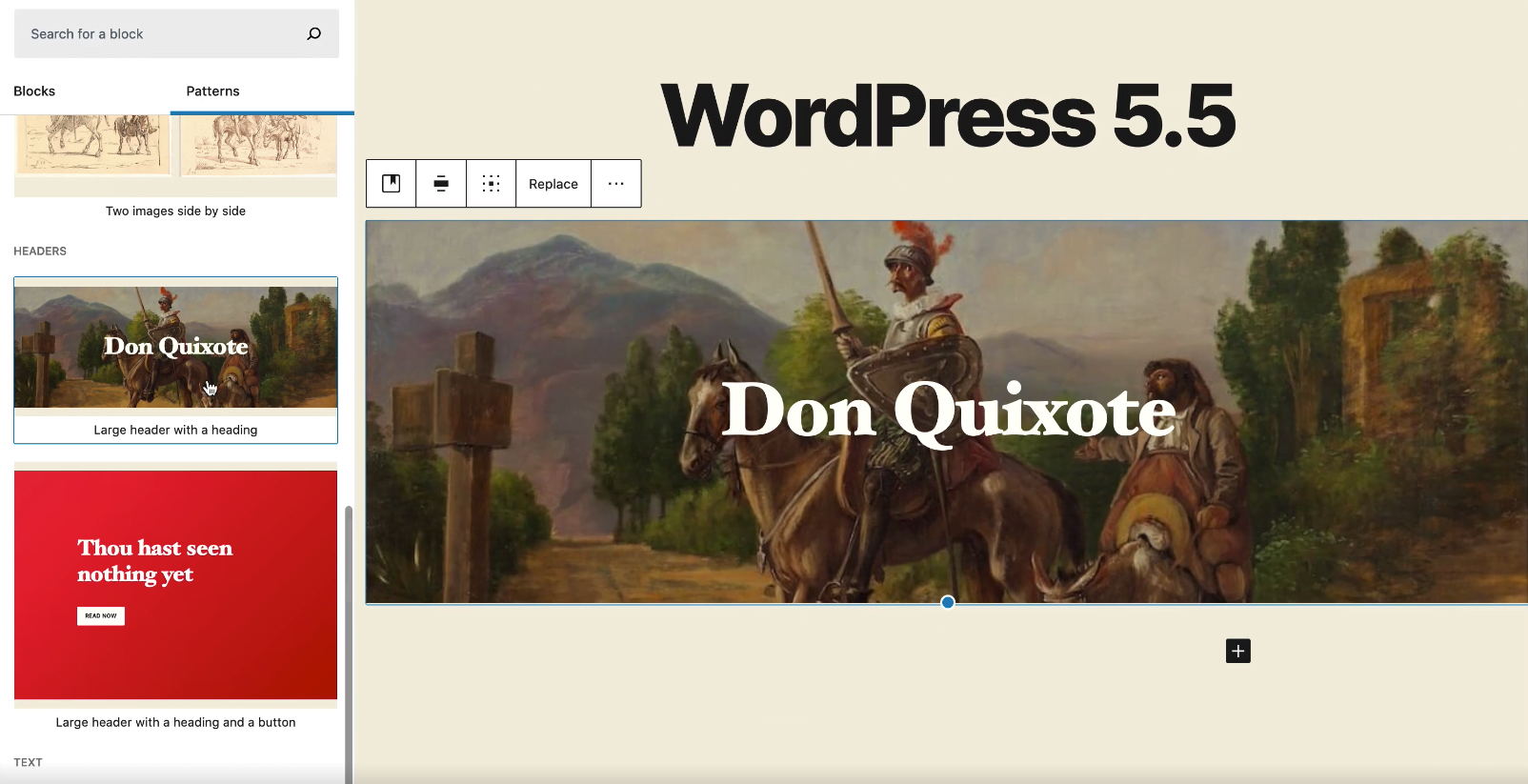
    WordPress 5.5 Block Editor Patterns

    A new block directory is available on the left top corner. New block editor patterns are comprises of useful and trending layouts for your webpage. For instance, a pattern called “Large Header with a heading” adds a full width image along with a heading. Therefore, such patterns reduces block handling complexity and increases productivity. WordPress wants 100% focus on the content not blocks. 😉

    New Image Compare Block

    A new block Image Compare Block, which is neat way to compare before | after images using a slider.

    Quickly Add Block in Post Editor

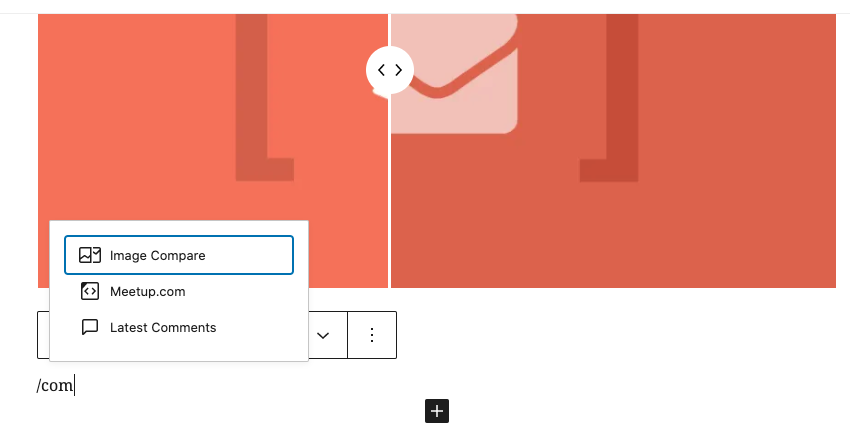
    Shortcut to Quickly Add Block

    Type forward slash “/” in an empty block, which further opens a list of available block to add. Just made it simpler!

    Edit Inline Image Block

    WordPress update adds inline image editing features. That means you can crop or edit the image without leaving the post editor interface in dashboard. Saves a lot of steps and increase productivity without compromising the quality.

    Features for Developers

    • Server-side registered blocks in the REST API
    • Dashicons Library updated with 39 Block Icons and 29 other icons
    • Passing data to template files
    • PHPMailer library updated to 6.1.6
    • And read more here

    Is Upgrading to WordPress version 5.5 Safe?


    WordPress 5.5 acknowledges to improve page speed score for performance, better user interface and visibility to rank on search engines. It is absolutely a stable release, so you can upgrade from WordPress 5.x to 5.5 fearlessly.

    Do let us know, in case you find any bugs when upgrading to WordPress 5.5 by posting a comment below.

  • How to Bulk Publish or Bulk Edit Posts, Pages & Products in WordPress?

    How to Bulk Publish or Bulk Edit Posts, Pages & Products in WordPress?

    WordPress is a powerful platform to organise almost any type of content management system, such as Blog, E-Commerce, Portal on your Website. Managing content, products and its hierarchy is very handy and so are the bulk publishing tools. In this article, we learn about how to bulk edit or publish posts, pages and products in WordPress.

    Bulk Edit Posts

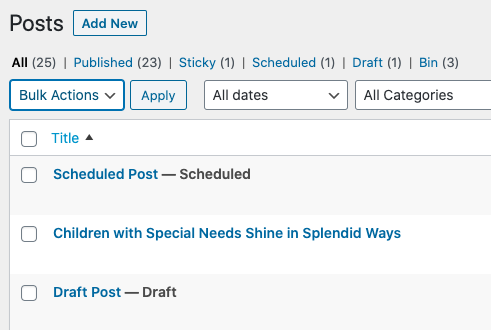
    To locate bulk actions in WordPress, navigate to Dashboard > All Posts. Just below the Posts Heading and above the posts listing, there is a drop-down selection box “Bulk Actions“. In contrast, this selection box extend bulk editing capabilities for our content management system.

    Bulk Edit Actions for Posts

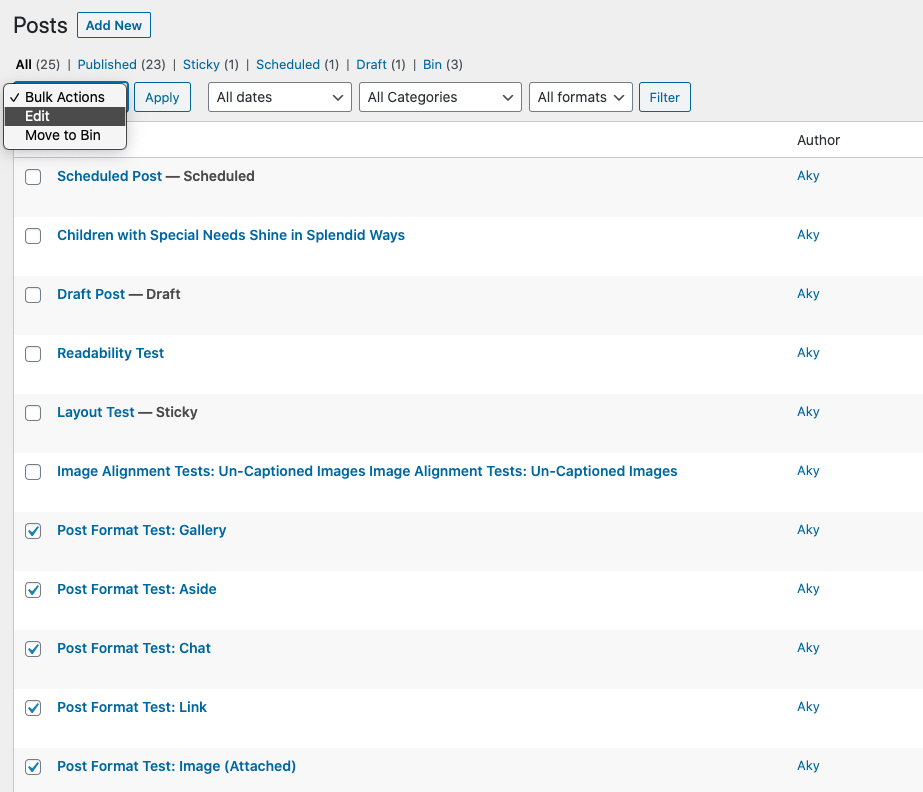
    To use bulk editing functionality, we must select the checkboxes located next to post titles. Because we are editing the WordPress posts in bulk. After multi-selecting the posts, select “Edit” to bulk edit the posts. Or “Move to Bin” to trash all the WordPress posts together.

    Bulk Edit Actions selection box for Posts

    Edit Actions for WordPress Posts

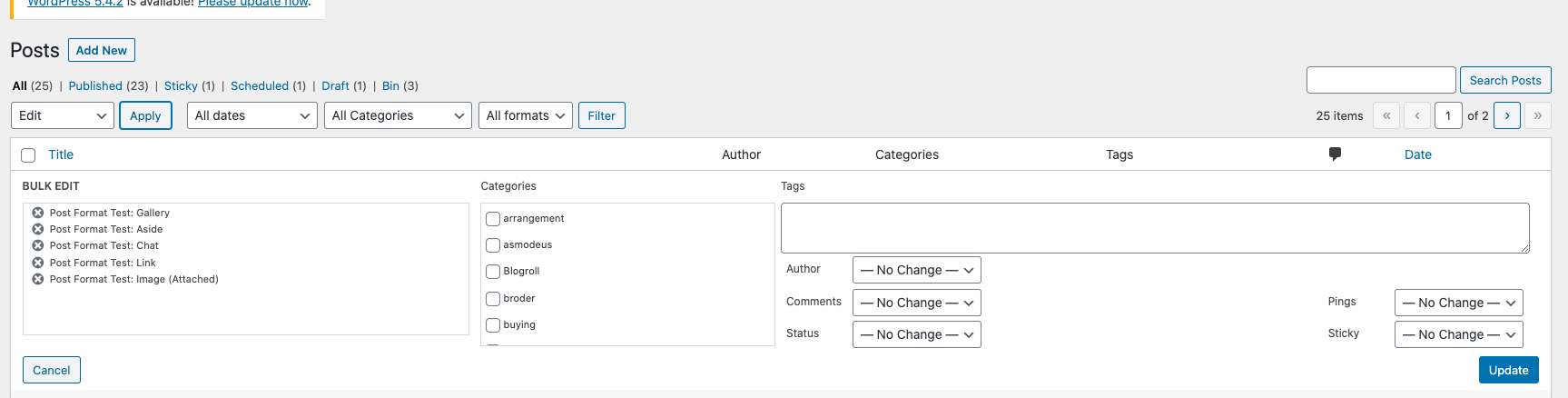
    If you select “Edit” bulk action, then we get the following options, as visible in the screenshot below.

    Bulk Edit Actions Options for Posts

    On the left most pane, it shows the selected post items, followed by the categories. This method is very useful to assign a single category to multiple posts. Similarly, you may assign Author, Allow Comments or Disallow comments, etc.

    Bulk Publish WordPress Posts

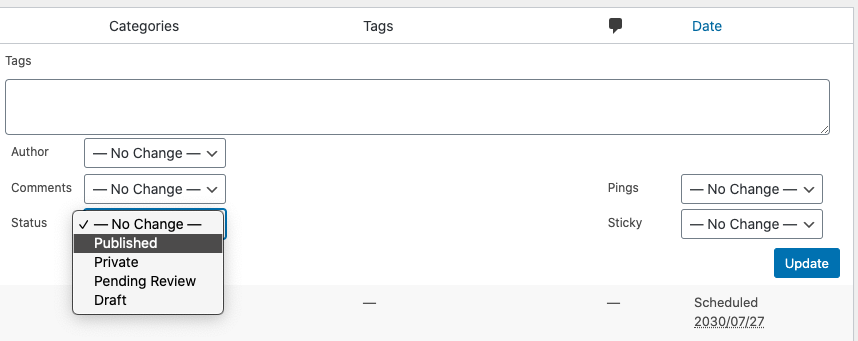
    To change the Status of the post from draft to Published or Pending Review, click on the Status selection box. So, Select “Published” option followed by “Update” button to change the status of the WordPress posts.

    Bulk publish Action for Posts

    Once you press the update button, WordPress will perform bulk actions to the WordPress posts.

    Note: All actions performed cannot be rolled back, hence update with utmost of care.

    Also keep reading for Pages and Products.

    Pages: 1 2 3

  • WordPress 3.6 Version “Oscar” Launched for Power Users

    WordPress 3.6 Version “Oscar” Launched for Power Users

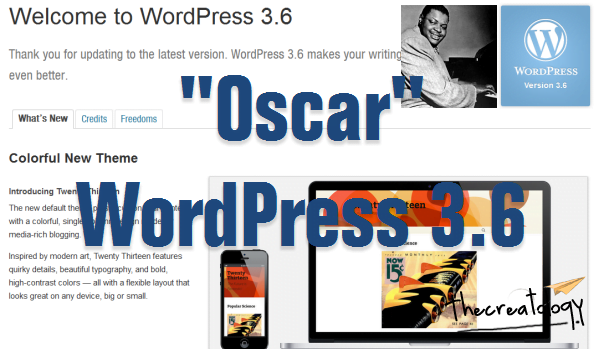
    A much awaited version of WordPress 3.6 “Oscar” is finally out of the jingle box. It is a stable release, especially for the Power Users, with a mobile responsive theme Twenty Thirteen and Revision History Engine. WordPress also claims to save post revision history, for each post-type, over 150 years only if you can survive up to that. LOL!

    Oscar WordPress 3.6 Version
    WordPress 3.6 Version “Oscar”

    Why WordPress 3.6 Oscar ?

    According to WP-Team, the version 3.6 is named after a great Jazz Pianist from Canada, Oscar Peterson.

    Features for Blogger / User

    There are no hidden features in WordPress 3.6, but here is a quick view below:

    • New Twenty Thirteen theme: To advance your level of Blogging, a new mobile optimized theme included is awesome. Twenty thirteen theme is a responsive and HTML5 friendly.
    • Revision History Engine: Revisions History Engine reconstructed to maximize its benefits for power bloggers. You can easily compare WordPress post revisions with a timeline slider.
    • WP-Embed Music shortcode: Easily embed music over Spotify & Rdio with new short-codes

    .

  • WP-HTML5 Media Player: A new html5 media player introduced for better cross browser stability and for your audio/video embeds.
  • WP-Menu New UI: New admin menu UI, lets you select the menu from drop down list and manage it. This is quite simple and much organized than the conventional tabbed one.
  • Features for Developers

    • New filters included for better extensibility.
    • External libraries updated  like jQuery, jQuery UI, Backbone etc.
    • Improved HTML5 markup for default comment forms, search forms and comment lists.
    • New Media API included to extract ID3 tags from music and video files.

    There are many more uncovered features in this version, important for your website or your client’s project development. So, stay tuned for more articles on WordPress 3.6 development.

    Is Upgrading to WP 3.6 Safe?

    WordPress 3.6 is a stable release, hence upgrading to WordPress 3.6 is absolutely safe. If you’re cooking something beyond the recipes of WordPress, then you might experience tasteless & sour layouts. 😛

    Did you update WordPress, yet? If Yes, how is the experience so far? If No, what are you wondering about WordPress 3.6? Do let us know by posting a comment below.

  • Hands on Thesis 2: Head Editor, Skin Editor, Boxes & Packages

    Thesis 2.0 theme is unique and highly inflammable interactive. I say this, ’cause of its navigation menu covers every bit of your WordPress template. But, guess what? There is no proper Thesis 2 documentation available/ready yet, so end-user is not aware of theme capabilities.

    Hands on Thesis 2 is a series of articles and requests from potential clients who are eager to handle new Thesis Theme. This tutorial explains about Thesis Head Editor, Skin Editor, Boxes & Packages which will help you build even better websites. I strongly recommend this article to people, who are new to Thesis 2.0 theme.

    Thesis 2 Navigation Menu

    New Thesis 2 Menu Bar
    New Thesis 2 Navigation Menu

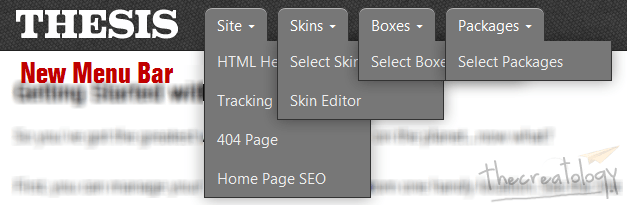
    The new Thesis 2 navigation menu consists of 4 major items, that is Head Editor, Skin Editor, Boxes and Packages. Let’s learn about these in detail, below:

    Website HTML Head Editor

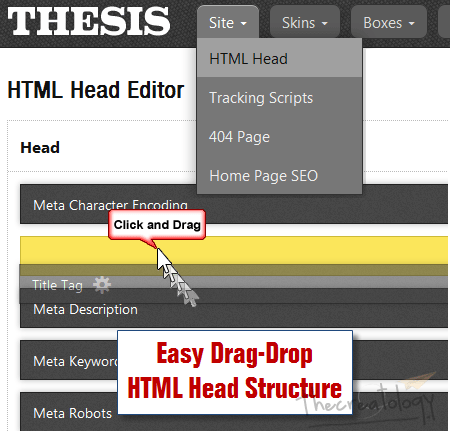
    HTML Head editor lets you manage < head > output of the website. HTML Head section is responsible for Website SEO, Page loading & other web analysis.

    Thesis html Head Editor
    Thesis HTML Head Editor

    Thesis HTML Head Editor lets you manage, the following:

    • Add / Upload Favicon
    • Set RSS feed link
    • Webmaster Site Vertification
    • Google Rel Authorship
    • Embed Header Scripts

    Thesis 2 Skin Editor

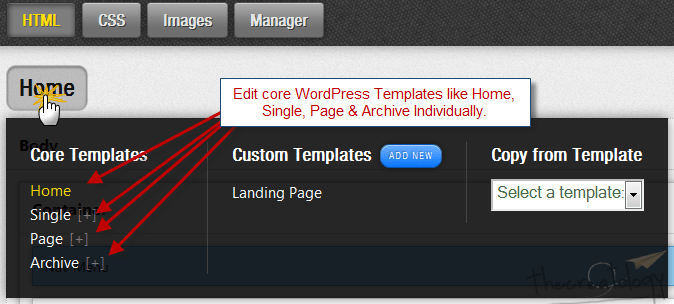
    Skin editor is the most important, Ajax-Driven component of Thesis 2. New Thesis framework works on Parent-Child architecture where we work upon child themes, also known as skins. Skin editor lets you manage core WordPress templates, like index.php, single.php, archive.php etc. with drag-drop feature. You can now customize a WordPress website without writing any PHP code.

    Thesis Skin Editor Part 1
    Skin Editor: Edit Core Templates from WP-Admin

    On any selected template, for instance Home, drag-drop boxes in Skin editor to create HTML structure of website. Drag-drop what? Arrrh! I know Skin editor is a bit tricky to grab in one-go. But, if you understand this, then things will be really handy.

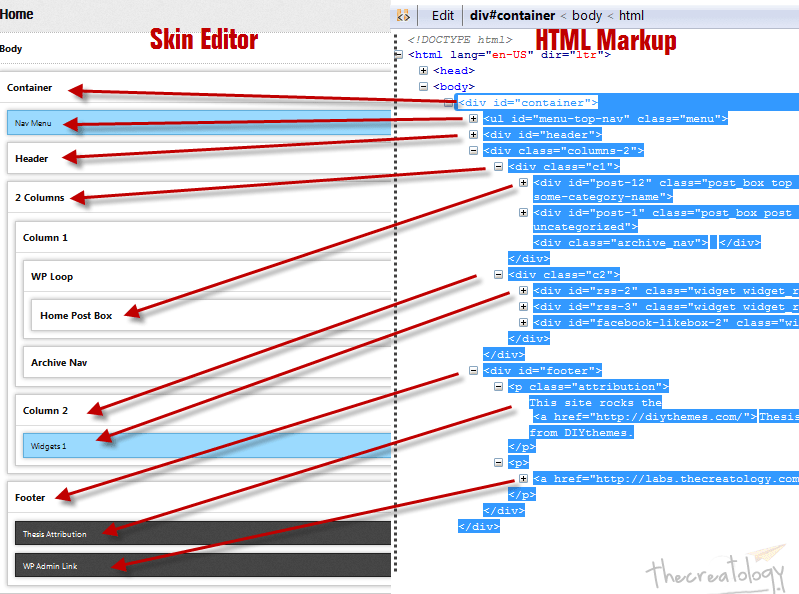
    Check out the info-graphic, explaining about Thesis Skin Editor – HTML Markup Structure, below:

    Thesis Skin Editor Working Part 2
    Thesis Skin Editor – HTML Markup Structure

    In the above image, left pane shows the hierarchy of boxes in skin editor, where right pane shows HTML output generated by Thesis (view from firebug). Moreover, arrow points to a respective box in Skin editor, which is responsible for its HTML output.

    To understand better, you should play around with default Thesis Classic skin which loads automatically when you install Thesis 2.

    Thesis 2 Amazing Boxes

    Thesis theme can extended by means of small modules, called boxes. Thesis Box functions like a plugin which can be reused anywhere in the website with drag-drop ease.

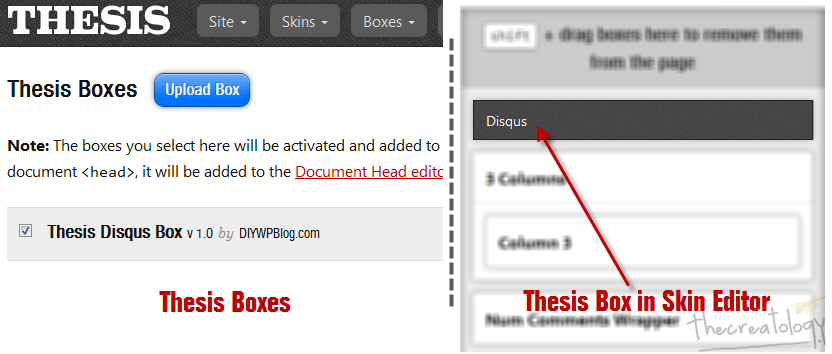
    For instance, we have uploaded a Disqus Comment Thesis Box in the example below:

    Thesis Amazing Disqus Comment Box
    Thesis Disqus Comment Box

    If we upload or select a box, it automatically gets added in Template editor. In this example, Disqus Comment box designed is for use in single template and hence it appears as a black-box in the skin editor’s sidebar. This is also a bug fix for Thesis 2 + Disqus Comment System.

    Thesis CSS Packages

    Packages, works similar to Boxes, are modules which help you to style font-family, width, height, background, color etc. Basically, Thesis boxes are PHP modules, where Thesis Packages are CSS modules. To be frank, Thesis Packages are required for advanced level blog development and multiple WordPress sites.

    There are many other features in Thesis 2 which will be covered in Hands on Thesis 2 series of articles, so keep in touch via Twitter, Facebook or RSS updates.

    That’s all folks!

    For any query or further help required post your feedback as comments below.

  • Use HTML5 Pattern to Input Specific URL using Regular Expression

    HTML5 Pattern works on the principle of regular expression, set of code defining a pattern.This htm5 pattern attribute helps in form validation and 99% accurate data input from user. In this tutorial, we will create a regular expression to validate URL field.

    learn-html5-to-create-websi.jpg
    Html5 Pattern Attribute

    What is Regular Expression?

    Regular expression is a set of characters which defines pattern to validates an expression. It helps in searching a word/character/letter in a given expression and returns true or false. For instance, a regular expression can extract “feel” word or “very lucky” words from “I am feeling very lucky today”.

    In this tutorial, we will validate various input fields to accept Youtube, Facebook, Twitter urls.

    Validate Input Field with Regex

    Here is a syntax for regular expression:

    Validating Youtube URL

    [code]
    <input type="url" pattern="http://www\.youtube\.com\/(.+)|https://www\.youtube\.com\/(.+)" />[/code]

    Validating Facebook URL

    [code]
    <input type="url" pattern="http://www\.facebook\.com\/(.+)|https://www\.facebook\.com\/(.+)" />
    [/code]

    Validating Twitter URL

    [code]
    <input type="url" pattern="http://\.twitter\.com\/(.+)|https://\.twitter\.com\/(.+)" />
    [/code]

    Above expression checks for a valid Youtube, Facebook & Twitter URL with protocols, either http or https.

    Demo

    Valid:

    Invalid:

    What’s Next?

    If you are looking to validate a custom name, then simply replace the words Youtube with your custom name. Such kinda validations are helpful for precise data input such as registration forms or contact forms.

    If you have any queries or need any assistance, then post them using the comment form below.

  • Hands on Thesis 2: How to Get Started with New Thesis Theme 2.0?

    Thesis 2 theme on WordPress blog will drive you & me crazy. Yes, it has newly constructed engine and thrilling dynamics which will make you feel like riding a 1000 cc super-bike. So, much power man!

    I like the fact that Thesis 2.0 no longer support hooks and filters, as it is hard to remember all of them at once.

    How to Install Thesis 2 on WordPress
    How to Install Thesis 2 on WordPress

    Hands on Thesis 2 is a series of articles and also request from my potential clients who wish to experience new Thesis Theme. This article explains How to Get Started with New Thesis Theme for WordPress in easy steps below.

    Download New Thesis Theme

    We have already covered this in our previous article. Click here to read, if you missed it somehow.

    Get Started with New Thesis 2

    If you are new to Thesis Theme then your journey will be amazing. Whereas, if you choose to upgrade old Thesis theme to Thesis 2, then you should consider my suggestions below.

    Do Not Install Thesis 2, if

    • Thesis 1.x theme designed using custom skin, then DO NOT INSTALL!
    • Thesis website developed using Open Hook plugin, then DO NOT INSTALL!
    • You like mountains but not hiking, then DO NOT INSTALL!

    Are you confused? Well, reverting back to old Thesis 1.x from Thesis 2.0 is absolutely normal.

    Install Thesis 2.0 Theme

    Now that you are logically ready, lets kick-start your Thesis 2.0 journey. Follow quick steps to install Thesis 2:

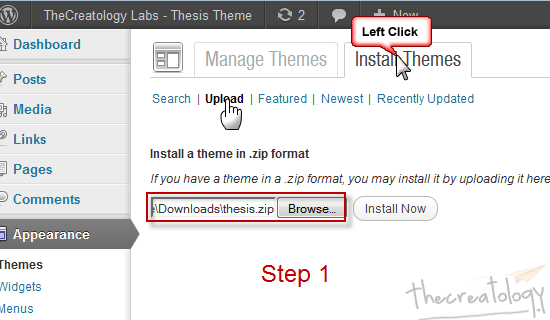
    • Navigate to Dashboard > Appearances > Themes.
    • Select Install Themes Tab and click on Upload text link visible in blue just like in screenshot below.

    Step1-Upload Thesis 2 Theme
    Step1: Upload Thesis 2 Theme

    • On hitting Install Now button, will take you to theme activation status screen. You can either click to activate theme or choose to do it later.
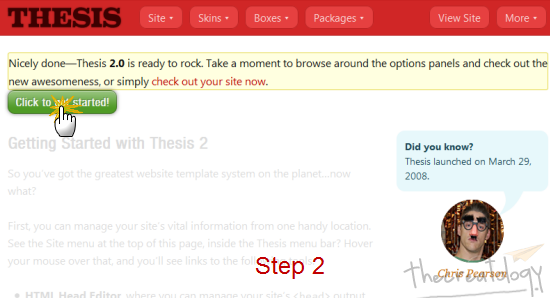
    • On activating Thesis 2, you will see a welcome page with greeting message. This page is personally designed for Chris Pearson and Missieur (his dog). 😛

    Step2- Thesis 2 Welcome Page Get Started
    Step2- Thesis 2 Welcome Page Get Started

    • Click green Get Started Button as soon as you activate thesis theme, else your website will show nothing but a white blank template.
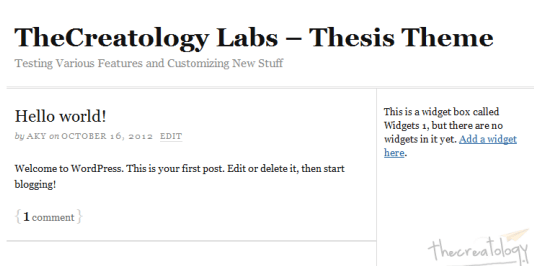
    • Once done, refresh your website and you will see something similar to screenshot below.

    Thesis Theme with Classic Skin
    Thesis Theme with Classic Skin

    • Tada…here it is, the new Thesis Theme loaded with classic skin.

    What’s Amazing about Thesis 2?

    New Thesis looks similar to older one, but is 10 times powerful in terms of flexibility and extensibility. Check out something amazing about Thesis 2.0, especially for lazy bloggers:

    • Design skins and customize from WordPress admin panel. No FTP!
    • Ease by Drag-drop HTML structure. No Coding!
    • Built-in CSS Packages. No Coding!
    • Missieur (Chris’s dog) tips about SEO, broken links & 404 error pages. The doggie style!

    There are many other features in Thesis 2 which will be covered in Hands on Thesis 2 series of articles, so keep in touch via Twitter, Facebook or RSS updates.

    That’s all folks!

    For any query or further help required post your feedback as comments below.

  • Easily Customize Website Header using Thesis Theme Hooks

    Most WordPress themes come with nice header layout design where some theme frameworks, like Thesis Theme have a sketched layout printed on white screen. Such themes allow N number of customizing options totally depending on the need.

    If you are a developer then you can easily customize the website header, but what if it’s not your cuppa tea. Either you will hire a developer or look up online for some WordPress tutorials and try to fix website header. Don’t worry if you are using WordPress Thesis Theme, as in this tutorial you will learn to customize website header using basic thesis hooks.

    Getting Started: Update Thesis Theme

    To make sure that we are sailing on the same ship, I recommend you to update Thesis Theme. No sure about it,  refer to article Safely upgrade to latest version Thesis 1.8. If you don’t have Thesis Theme Copy then you can also Download Thesis Theme.

    Thesis Header Hooks

    Thesis theme framework has been strongly build leaving many options to override default functions, we call these functions as thesis hooks. You can play around with these hooks to customize different blocks (header, content, sidebar or footer) in website . But, be careful while editing custom_functions.php file, as any wrong code can crash your website.

    To customize thesis header you may need the following hooks:

    1. thesis_hook_before_html
    2. thesis_hook_before_header
    3. thesis_hook_header
    4. thesis_hook_after_header

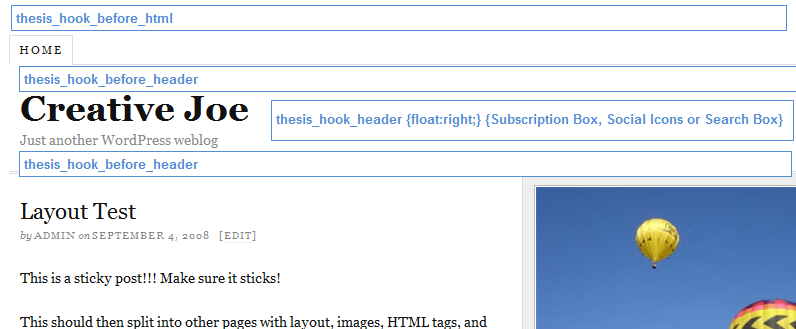
    Here is a quick visual reference of the above mentioned hooks:

    thesis header hook implementation
    Thesis header hooks implementation

    Add Thesis Hook in Custom_Functions.php

    You can take control of your website using Thesis hooks but before that you should know how to implement thesis hooks. Each Thesis installation has a custom directory in Thesis Theme. Custom directory, is where you do all thesis customizations, has the following files:

    1. custom.css (where we style and override default stylesheet)
    2. custom_functions.php (where we define hooks and override default functions)

    To define a basic Thesis header hook, open custom_functions.php in editor use the following code snippet:

    [php]
    function first_hook_before_header() { ?>
    <p style="border:1px solid #ddd;color:#d00; margin:5px; padding:3px;">This is Thesis Hook Before Header</p>
    <?php }
    add_action(‘thesis_hook_before_header’,’first_hook_before_header’);
    [/php]

    The above code adds a paragraph styled in a grey border box before thesis theme header. In similar way you can implement other hooks to define your actions as needed.

    Cool Thesis Header Examples

    Here are few inspiring header designs customized using Thesis theme:

    Cool Website Header Dodography
    Cool Website Header – Dodography

    Cool Website Header ImieBelanger
    Website Header – ImieBelanger

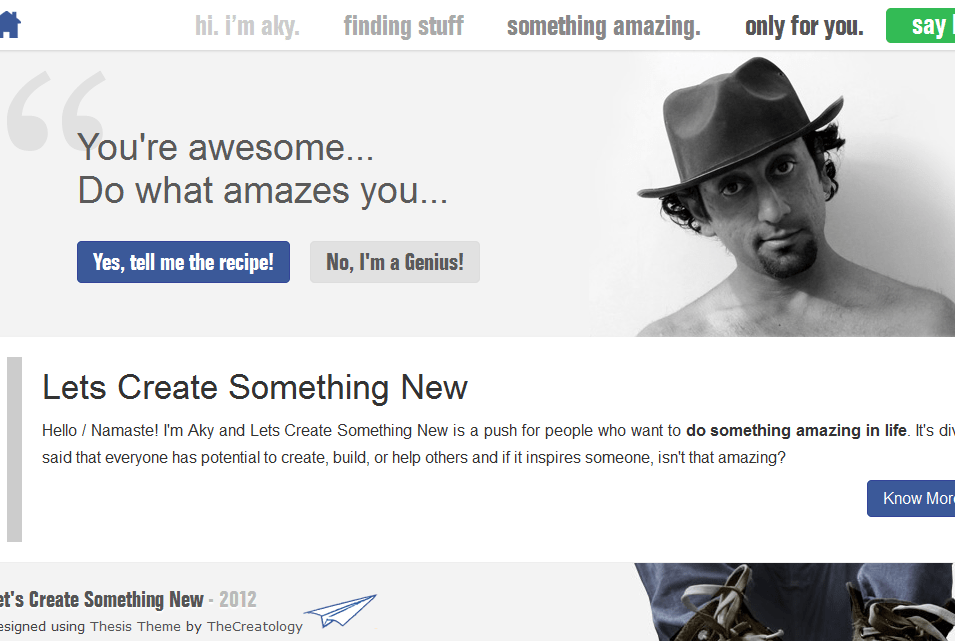
    Cool Website Header LetsCreateSomethingNew
    Website Header – LetsCreateSomethingNew

    Cool Website Header ShoutMeLoud
    Website Header – ShoutMeLoud

    What’s Next?

    You must be excited now to customize your website header after this handy tutorial. If you have any queries or need any assistance,  then post it using comment form below.