Two businesses post the identical announcement on the same morning.Business A gets forty likes and silence. Business B gets twelve comments, three shares, and a customer asking where to buy. Same product, same platform, same day.
The difference is not luck. Talk That Travels, the fourth pillar of Digital Intent, explains exactly what separates them.
What Business A Gets Wrong
Business A treats social media as a billboard. It announces, it promotes, it waits for likes to accumulate. However, followers do not pay bills. Conversations do, and a billboard has never once started a conversation.
What Business B Does Differently
Business B asks real questions instead of announcing products. It responds to every comment with something specific, not a generic “thanks!”. It shares the occasional behind-the-scenes moment instead of only polished output. Furthermore, it features customers publicly, showing it listens rather than broadcasts.
None of this requires a bigger budget. It requires a different intention behind each post.
Why Algorithms Reward Business B Anyway
Platform algorithms increasingly favour content that generates comments and shares over content that merely gets seen. Consequently, Business B’s engagement is not just good practice, it directly improves visibility too, creating a compounding advantage over Business A’s silence.
Measuring What Actually Matters
Business B stopped tracking follower counts months ago. Instead, it tracks comments, shares, and direct messages: the metrics that reflect genuine relationship rather than passive visibility.
A post with fifty thoughtful comments delivers more business value than one with five thousand silent views. Business A is still waiting to learn that.
Becoming Business B
Commit to responding within hours, not days. Allocate time weekly purely for engagement, separate from content creation itself.
This pillar completes the visibility work begun in Content That Connects. Together, they transform passive followers into an active, invested community, the kind Business A is still trying to buy with likes.
One relevant article outperforms seven generic posts. Content That Connects is the third pillar of Digital Intent, and a sound content marketing strategy demands quality over quantity, always.
Many businesses post daily without strategic purpose. Consequently, they exhaust resources whilst achieving minimal impact. Relevance, not frequency, drives genuine business results.
Why Reach Alone No Longer Works
Algorithms increasingly reward engagement over raw impressions. Therefore, content that fails to resonate gets buried, regardless of how many people technically saw it.
Moreover, customers now recognise generic content instantly. Consequently, they scroll past it without a second thought, wasting your publishing effort entirely.
What Makes Content Genuinely Connect
1. It Solves a Real Problem
Before writing anything, identify an actual customer pain point. Subsequently, address it directly, without burying the solution beneath unnecessary preamble or jargon.
2. It Provides Value First
Effective content educates before it sells. Additionally, this builds trust incrementally, so that when you do ask for business, customers already believe in your expertise.
3. It Speaks Plainly
Avoid industry jargon that alienates readers. Instead, write as though explaining the concept to a genuinely curious friend over coffee.
4. It Answers Specific Questions
Generic content about “digital marketing tips” struggles to rank or resonate. In contrast, specific content, such as how Indian bakeries can use Instagram Reels, attracts precisely the right audience.
A Simple Content Marketing Strategy Audit
Review your last ten posts. How many directly solved a customer’s problem? Furthermore, how many existed purely to maintain a posting schedule?
If most posts fall into the second category, your content marketing strategy needs realignment. Quality content, published less frequently, consistently outperforms empty volume.
Building Content That Connects
Start each piece by writing down the specific reader you’re addressing. Then, identify their exact question before drafting a single sentence.
This pillar transforms your digital presence from noise into genuine value. Ultimately, relevance beats reach every single time.
Trends fade. Identity endures. Look That Lasts is the second pillar of Digital Intent, and strong brand identity design asks a deceptively simple question: will your branding still work in five years?
Many businesses chase whatever design trend currently dominates Instagram. However, constant reinvention confuses customers rather than attracting them. Consistency, not novelty, builds recognition.
Why Timeless Branding Beats Trendy Branding
Every design trend eventually looks dated. Neumorphism, glassmorphism, and oversized typography each had their moment, then faded. Meanwhile, brands built on genuine purpose remain recognisable decade after decade.
Consequently, chasing trends wastes budget on redesigns that deliver diminishing returns. Instead, invest once in an identity rooted in what your business authentically represents.
Four Principles of Brand Identity Design That Lasts
1. Purpose Before Palette
Choose colours and typography because they communicate your values, not because they’re currently fashionable. Ask what feeling your brand should evoke, then design towards that feeling deliberately.
2. Consistency Across Every Touchpoint
Your logo, website, packaging, and social media must feel unmistakably connected. Furthermore, inconsistency (different fonts here, mismatched colours there) quietly erodes customer trust over time.
3. Simplicity Over Complexity
The world’s most enduring logos are remarkably simple. Additionally, simple marks scale better across formats, from business cards to billboards, without losing clarity.
4. Restraint in Reinvention
Refresh your identity occasionally, but avoid wholesale reinvention. Subtle evolution preserves recognition. In contrast, dramatic rebrands often confuse loyal customers who already trust your existing look.
A Practical Branding Exercise
Write down three words describing how customers should feel when encountering your brand. Then, audit your current visual identity against those words honestly.
Does your typography feel trustworthy, if that’s your goal? Does your colour palette feel energetic, if that’s your intention? Misalignment here explains why many rebrands ultimately fail.
Building Your Look That Lasts
Start by documenting your brand identity design guidelines properly: colours, fonts, tone, and imagery style, even if you’re a small business. Subsequently, apply these consistently across every platform without exception.
This pillar works alongside Space That Invites to transform passive presence into genuine digital intent. Together, they form the visual foundation everything else builds upon.
It is 2031. Aisha runs a mid-sized textile export business in Surat. She wakes to find her digital chief of staff has already drafted the week’s blog post, answered nine customer queries on WhatsApp, and flagged a supplier delay before her first cup of chai.
This is not science fiction. It is a straight line forward from one afternoon in 2026, when we connected Claude to our own WordPress blog for the first time.
A Morning Five Years From Now
Picture a business where the website, the inbox, the calendar, and the inventory system all speak the same language, and an AI assistant moves fluently between them. Nothing gets typed twice. Nothing waits in a queue overnight.
That world sounds distant. However, the infrastructure underneath it is being built right now, one connection at a time.
Why We Started With WordPress
We could have picked a more impressive first project. Instead, we connected Claude to our own blog, because the pitch made itself.
Everyone in the room already understood WordPress. Consequently, nobody needed convincing that an AI assistant reading and drafting posts was useful. The risk was low, the value was visible immediately, and the whole team could see the result within a single afternoon.
That ease of pitching matters more than it first appears. Ambitious AI projects often stall because nobody can picture the payoff. A blog, in contrast, is something everybody already understands.
The Compounding Logic Behind Small Connections
Here is the pattern we have noticed: each tool you connect does two things at once. It saves time today, and it teaches your organisation how to trust an AI with real work.
That second effect compounds. A team that has watched Claude draft, revise, and safely publish a blog post grows comfortable handing over the next task, then the next. Five years from now, the businesses ahead of the curve will not simply own more AI tools. They will have built an operating rhythm where delegation to AI feels ordinary.
Consequently, the real advantage of starting today is not the WordPress integration itself. It is everything your team learns about working alongside AI while building it.
From Our Blog to Aisha’s Chief of Staff
The Model Context Protocol connecting Claude to our WordPress site today is the same category of technology that will, eventually, connect Aisha’s AI assistant to her inventory, her supplier relationships, and her customer conversations.
The difference between now and 2031 is not the underlying idea. It is simply the number of connections, and the years of accumulated trust behind them.
Start With the Easiest Pitch in the Room
You do not need a five-year roadmap to begin. You need one connection that everyone in your business already understands, much like ours was.
Start there. Build the trust. Then, connection by connection, work towards the morning Aisha will eventually take for granted.
Can a first-time visitor understand your website within ten seconds? If not, your business needs a website UX audit today. Space That Invites is the first pillar of Digital Intent, and it begins with an honest self-assessment.
Most Indian business websites still prioritise decoration over function. Consequently, visitors struggle to find what they actually need. However, a focused website UX audit changes this quickly.
Why Space That Invites Matters First
Your website functions as your digital headquarters. Therefore, it must welcome visitors rather than confuse them. A cluttered homepage signals disorganisation. In contrast, a clean, purposeful layout builds instant trust.
Furthermore, Google now rewards strong user experience through Core Web Vitals. Consequently, poor UX doesn’t just lose customers. It damages your search rankings too.
The Five-Point Website UX Audit for Indian Businesses
1. Loading Speed
Test your homepage using Google PageSpeed Insights. Aim for under three seconds on mobile networks. Additionally, compress images and remove plugins that slow page loads unnecessarily.
2. Mobile Responsiveness
Most Indian internet users browse primarily via mobile devices. Therefore, your site must adapt seamlessly across screen sizes. Check every page manually on an actual smartphone, not merely a browser preview.
3. Navigation Clarity
Visitors should reach any page within three clicks. Moreover, menu labels must use plain language, never internal jargon. Ask a colleague unfamiliar with your business to navigate it blind.
4. Visual Hierarchy
Important elements, such as your value proposition, contact details, and calls-to-action, deserve visual priority. Whitespace helps content breathe. Meanwhile, competing banners and pop-ups actively harm comprehension.
5. Trust Signals
Display your address, phone number, and registration details clearly. Additionally, genuine customer testimonials outperform generic stock photography. Trust, ultimately, converts browsers into buyers.
Common UX Mistakes Indian Businesses Make
Many websites confuse activity with progress. Auto-playing videos, five simultaneous pop-ups, and animated backgrounds do not aid conversion. Instead, they create friction precisely when clarity matters most.
Similarly, businesses often organise navigation around internal departments rather than customer needs. However, visitors don’t care about your org chart. They care about solving their problem.
Your Next Step Towards Space That Invites
Start with a single page: your homepage. Remove every element that fails to serve a visitor’s immediate need. Subsequently, measure your loading speed and mobile experience honestly.
This simple website UX audit is the foundation of Digital Intent, the first of six pillars. Get this right, and every other investment in your digital presence strategy will perform noticeably better.
How do you give an AI agent access to your CRM, inventory system, and Google Docs without building a million custom integrations? You use the Model Context Protocol (MCP).
For decades, enterprises have wrestled with the “N×M integration problem”—connecting N applications to M data sources requires building N×M custom integrations.
However, Anthropic’s Model Context Protocol is changing this landscape by providing an open standard that enables developers to build secure, two-way connections between their data sources and AI-powered tools.
What Is the Model Context Protocol (MCP)?
The Model Context Protocol is an open-source standard for connecting AI applications to external systems. Think of MCP as a USB-C port for AI—instead of building separate connectors for every data source, developers now build against a single protocol.
The MCP architecture is straightforward. MCP Clients live inside AI applications and orchestrate information flow, whilst MCP Servers expose data and functionality from external systems. Consequently, AI models using Model Context Protocol can access your Google Calendar, generate applications using Figma designs, or analyse databases using natural language chat.
Why Model Context Protocol Matters: Solving the Integration Crisis
Before MCP, 10 AI applications connecting to 100 tools potentially required 1,000 different integrations. Model Context Protocol solves this by introducing a universal protocol—implement MCP once, and unlock an entire ecosystem.
MCP server downloads grew from approximately 100,000 in November 2024 to over 8 million by April 2025, reaching 97 million monthly SDK downloads (Python + TypeScript combined) by late 2025/early 2026, with over 10,000 active public MCP servers now available (directories show 8,243+ on PulseMCP and up to ~17,000–20,000+ across others like mcp.so and MCP Market).
Indian Enterprises Leading MCP Adoption
Major Indian IT giants are driving global Model Context Protocol adoption. TCS, Infosys, Wipro, and Cognizant collectively deployed over 200,000 Microsoft Copilot licences using MCP in December 2025, marking one of the largest enterprise AI rollouts globally. Furthermore, Infosys partnered directly with Anthropic to integrate MCP-powered agentic AI capabilities across their operations, whilst TCS announced a strategic collaboration with OpenAI.
These MCP deployments demonstrate substantial ROI. Microsoft described these firms as “Frontier Firms” for embedding AI into core operations across delivery, sales, finance, HR, and customer engagement. Moreover, employees report significant productivity gains when using MCP-powered agentic tools for complex workflows.
How Model Context Protocol Works
MCP operates through three fundamental building blocks:
Tools: Functions AI agents invoke to perform actions (creating CRM records, generating invoices)
Resources: Data sources AI agents read (documents, databases, API endpoints)
Prompts: Specialised instructions guiding AI behaviour for specific workflows
Moreover, MCP supports multiple transport protocols—STDIO for local processes and HTTP with SSE for remote cloud deployments—ensuring flexibility across deployment scenarios.
MCP Security and Governance
Model Context Protocol was designed with enterprise security in mind. The host instantiates clients and approves servers, allowing organisations to strictly manage what AI assistants access through MCP. Furthermore, MCP enables:
Granular permissions defining exact tool and resource access
Tool annotations marking “read-only” or “destructive” actions
Nevertheless, enterprises must remain vigilant. Security researchers identified issues including prompt injection and tool permission exploits. To address these concerns, organisations should build catalogues of approved MCP servers, implement AI gateways for additional security layers, and conduct regular security audits.
The Indian AI Market Opportunity with MCP
The timing for Model Context Protocol adoption couldn’t be better for Indian enterprises. India’s government launched a ₹10,000 crore (approximately ₹10,974 crore) AI mission to boost AI infrastructure and MCP adoption. Subsequently, agentic AI software spending is projected to reach ₹90 lakh crore globally by 2030, growing at 62.7% CAGR from 2025 to 2030.
Indian companies are well-positioned to capture this growth using Model Context Protocol. Over 80% of Indian organisations are actively exploring autonomous agent development with MCP, whilst India’s agentic AI market is estimated to reach ₹5,390 crore in 2026. Additionally, Indian IT companies collectively export technology services worth over ₹20 lakh crore annually, positioning them to lead global MCP enterprise AI adoption.
Implementing Model Context Protocol in Your Organisation
Adopting MCP complements existing infrastructure. Start with pre-built MCP servers for Google Drive, Slack, GitHub, and Postgres. Then identify high-impact Model Context Protocol use cases:
Customer Support: Connect AI agents to ticketing systems using MCP for automatic triage Data Analysis: Enable database queries through Model Context Protocol without SQL expertise Development Workflows: Access repositories via MCP through unified interfaces
Subsequently, build custom MCP servers for proprietary systems using available SDKs in Python, TypeScript, Java, C#, PHP, and Kotlin.
The Future of Business AI
The MCP ecosystem is experiencing explosive growth. OpenAI, Google DeepMind, Microsoft, and AWS have all embraced MCP, ensuring cross-platform compatibility. Indian enterprises are particularly well-positioned, given their scale, technical expertise, and strong client relationships globally.
Just as TCP/IP enabled the Internet to flourish, MCP is becoming the universal protocol enabling enterprise AI to reach its full potential. Indian IT leaders are already demonstrating this—with TCS, Infosys, Wipro, and Cognizant setting global benchmarks for agentic AI deployment.
Start small. Build one MCP server for a high-value use case. Experiment with pre-built servers. Learn what works. Then scale systematically. The new “TCP/IP” of business AI is here, and Indian enterprises are leading the way.
Google’s NotebookLM represents a paradigm shift in educational technology. This AI-powered platform transforms passive reading into active, conversational learning. Consequently, busy parents finally gain a practical solution for supporting children’s education without sacrificing their own schedules.
The Parent’s Dilemma: Quality Education Without the Time Drain
Why Traditional Support Fails Busy Parents
You are juggling work, household responsibilities, and your children’s education. Moreover, you genuinely want to support their learning. However, helping with homework feels impossible when deadlines loom at the office.
Tutors cost ₹500~2000 per hour, draining family budgets quickly. Furthermore, coordinating schedules with tutoring services adds administrative burden. Your child sits alone studying, struggling with concepts you could explain—if only you had time.
Traditional methods leave everyone frustrated. Your child does not get proper support. You feel guilty about not being more involved. Consequently, everyone is stressed out.
The Time-Poor Parent’s Breakthrough
NotebookLM solves this tension beautifully. The platform becomes your child’s personal tutor, available whenever needed. Therefore, you reclaim precious hours whilst ensuring your child receives quality educational support.
Think of it as having a knowledgeable mentor inside your home. Your child uploads textbooks, class notes, and study materials. Subsequently, they have natural conversations about their learning. Additionally, you monitor progress through simple dashboards—no complicated interface required.
Real Scenarios: How NotebookLM Solves Actual Family Challenges
1. The GCSE Panic: Your Child Needs Help, You Have No Time
For instance, a 11 year old child has mid-terms approaching. They are drowning in syllabus content. You want to help revise but managing work emails whilst explaining photosynthesis feels impossible.
NotebookLM changes everything. Your child uploads all their biology notes and past papers. Subsequently, they ask questions whenever confusion strikes. Therefore, they revise actively instead of passively rereading textbooks.
The platform generates practice questions automatically, aligned perfectly with upcoming exams. Moreover, it explains incorrect answers in detail, building genuine understanding. Your child studies independently whilst you handle work commitments. Additionally, you receive summaries of progress without intensive monitoring.
2. The Homework Battle: Independence Without Abandonment
Another example, with a 7 year old child who needs help with algebra homework. You are finishing dinner, answering work calls, managing younger siblings. This situation sparks tension and frustration for everyone.
Instead, encourage your child to upload textbook chapters and class notes to NotebookLM. Furthermore, they ask the AI to explain specific concepts step-by-step. Therefore, they develop problem-solving skills independently. In contrast, traditional homework help often creates dependency on parental assistance.
You are available if something truly confuses them, but most nights they work through challenges alone. Consequently, their confidence grows. Additionally, they take responsibility for their learning.
The Parent Game-Changers: Features That Save You Hours
Audio Summaries: Learning During Commutes
NotebookLM generates podcast-style audio summaries where two AI voices discuss course content conversationally. Your child listens during school transport, gym sessions, or meal prep, transforming wasted time into productive learning. Consequently, you avoid evening homework battles, revision becomes less painful, and improved retention happens naturally without intensive effort.
Your child can pause audio summaries and ask the AI direct questions, receiving instant explanations that make learning dynamic rather than one-directional. Furthermore, they explore related concepts naturally, developing genuine curiosity instead of box-ticking revision. Therefore, information sticks permanently whilst your child studies independently, and most importantly, they actually enjoy their learning sessions.
Automatic Progress Tracking: Know Where They Stand
The platform generates performance summaries based on quiz results and conversation patterns, allowing you to understand your child’s strengths and gaps instantly. Consequently, you identify struggling areas before report cards reveal problems, preventing terrible discoveries at parent-teacher conferences and enabling your child to improve steadily rather than falling behind dramatically.
Getting Started: Simple Setup for Busy Parents
Step 1: Create a Google account (your child likely already has one for school).
Step 3: Show them how to upload documents (PDFs, Google Docs, websites from textbooks).
Step 4: Encourage natural questions about their learning.
Step 5: Periodically check progress summaries to monitor development.
Most parents complete initial setup in under five minutes. Furthermore, your child requires minimal guidance beyond that. Consequently, the system works effortlessly once launched.
The Real Bottom Line for Busy Parents
NotebookLM democratises educational support for time-pressured families. Previously, only wealthy families could afford private tutors. Moreover, working parents struggled balancing professional demands with educational responsibilities. Now, every child accesses AI-powered tutoring support.
The technology is not perfect—occasionally it misunderstands context. Nevertheless, it consistently outperforms leaving children to study alone. Most importantly, it restores family harmony around education.
Your child becomes more independent. You feel less guilty about limited availability. Homework battles decrease significantly. Study time reduces because learning becomes efficient and engaging. Additionally, your child’s confidence improves noticeably.
Teachers report improved class participation when students use NotebookLM properly. Furthermore, exam results genuinely reflect better preparation. Most crucially, you have reclaimed your evenings without sacrificing your child’s educational quality.
Start experimenting this week. Your family’s next breakthrough in managing education awaits inside NotebookLM. Your sanity—and your child’s learning—will thank you.
Most businesses today have a website and post on social media—they’re present online. But building digital presence for business without purpose is like shouting into a crowded room. Nobody’s truly listening.
Digital presence strategy business transforms your online footprint from a static placeholder into a dynamic business asset through strategic clarity and purposeful design.
Understanding Digital Presence vs Digital Intent
The difference is not subtle—it’s the gap between background noise and meaningful conversation.
Digital Presence means you exist online:
You have a website that’s live
You post occasionally on social platforms
You appear in search results
You maintain basic online visibility
Digital Intent means you operate strategically:
Every design element serves a clear purpose
Content solves problems before asking for sales
User experience drives every decision
Outcomes are measured against business goals
Visual Noise Dilemma in Contemporary Web Design – A Barrier to Effective Digital Presence Strategy Business
The digital marketplace faces a unique challenge: visual complexity has become the default language of business. Websites overflow with competing animations, cluttered interfaces drown users in options, and messaging prioritises visual effects over clear functionality.
Therefore, tendency towards overload can detract from usability, hinder user focus, and prioritise superficial appeal at the expense of intuitive, efficient experiences. Let’s look at the few examples below:
Example 1: The Restaurant Website – Applying Digital Intent to Building Digital Presence for Business
Digital Presence Approach: Homepage features rotating banner images, background music, animated menu cards, five pop-ups (newsletter, offers, locations, app download, feedback), and buried contact information.
Digital Intent Approach: Clean homepage with your location, today’s opening hours, one-click menu access, and prominent reservation button. So, every element answers the question: “What does a hungry person need right now?”
Example 2: The Professional Services Firm – Strengthening Digital Presence Strategy Business
Digital Presence Approach: Generic stock photos, lengthy “About Us” corporate history, industry jargon throughout, and unclear service descriptions spread across multiple pages.
Digital Intent Approach: Client problem statements as headlines, specific outcomes you deliver, case study summaries with measurable results, and clear next steps for engagement.
Why Digital Presence Fails: Three Critical Mistakess in Building Digital Presence for Business
Confusing Activity with Strategy
Posting content daily without a clear strategic purpose does not strengthen your brand; it depletes your time, energy, and resources. A single, well-considered piece of content that directly addresses a genuine customer challenge or need will deliver far greater value than seven days of generic, unfocused updates.
Mistaking Decoration for Communication
Visual complexity should never be mistaken for sophistication. When a manufacturing company’s website employs parallax scrolling, animated infographics, looping video backgrounds, and numerous decorative effects—yet visitors cannot quickly discern what products are offered or what the business actually does—ornamentation has overtaken effective communication.
Prioritising Impression Over Connection
Designing primarily to impress peers or win design awards, rather than to serve user needs, results in aesthetically impressive websites that fail to convert. A website is not a showcase for creative portfolios; it is a functional business asset whose primary role is to facilitate understanding, trust, and commercial outcomes.
The Design Revolution: Form Follows Function in Your Digital Presence Strategy Business
The principle that revolutionised physical design a century ago offers the solution: every element must serve a clear purpose.
This means:
Clean, uncluttered interfaces that respect user attention
Typography and layout that enhance readability
Colour choices that communicate meaning, not just aesthetic preference
Whitespace that allows content to breathe
Navigation that prioritises user goals over organisational structure
This approach is not minimalism pursued for its own sake. But, it is purposeful, considered design that respects the audience’s time, attention, and intelligence.
Digital Intent in Practice: The Six Pillars of Building Digital Presence for Business
Moving from passive presence to active intent requires foundation-building with a strong digital presence strategy business:
Space That Invites: Websites designed with user experience as the top priority—fast, intuitive, and mobile-responsive.
Look That Lasts: Visual identities rooted in enduring principles rather than fleeting trends, creating recognition through consistency.
Content That Connects: Messaging that addresses real human needs, providing value before asking for anything in return.
Talk That Travels: Social media that sparks genuine conversations rather than broadcasting announcements.
Peace That Protects: Robust security measures that safeguard both your business and customer trust.
Tool That Accelerates: AI automation, in essence that handles repetitive tasks, freeing your team to focus on strategic, creative work.
Building Your Online Presence Strategy – Mastering Digital Presence Strategy Business
The businesses that will dominate this year won’t have the most sophisticated designs or largest social followings. They undeniably will be the ones brave enough to simplify while building digital presence for business..
Start by asking: Can a first-time visitor understand what you do and why it matters within 10 seconds?
If not, begin stripping away the unnecessary. Remove decorative elements that do n’t serve user needs. Clarify your messaging. Ensure every design choice enhances understanding rather than creates friction.
Although the digital design revolution India needs isn’t about adopting new trends—it’s rediscovering timeless principles of clarity, purpose, and genuine connection in building digital presence for business..
The future belongs to brands clear enough to be understood and purposeful enough to be remembered through an effective digital presence strategy business.
Over the coming months, for this purpose we shall explore each of these six pillars in depth, providing practical frameworks for transforming your digital presence into digital intent. Because in 2026, being simply present online is no longer enough.
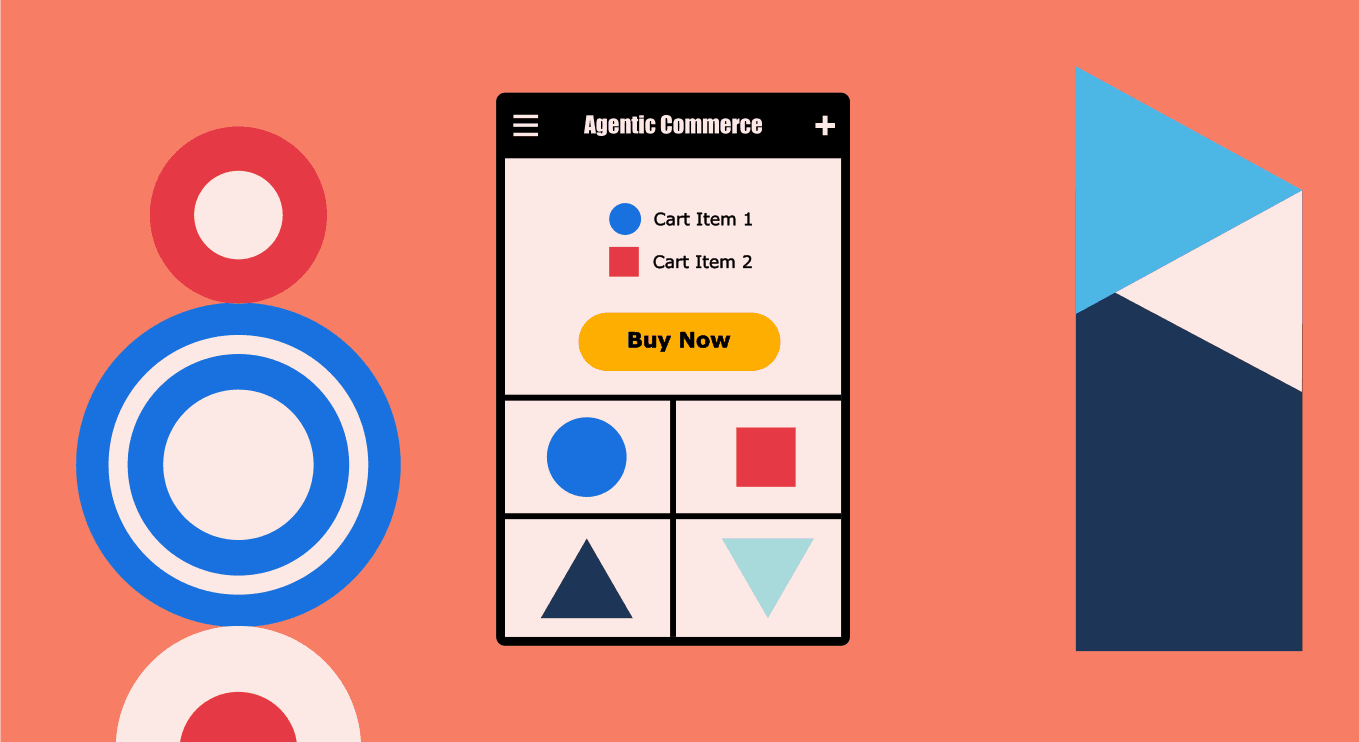
For the last two decades, e-commerce has been designed for human eyes: colourful banners, persuasive copywriting, and “Buy Now” buttons strategically placed to capture attention. However, a profound shift is underway. We are entering the age of agentic commerce—a digital economy where your next high-value customer may not be a human, but an AI shopping agent acting on their behalf.
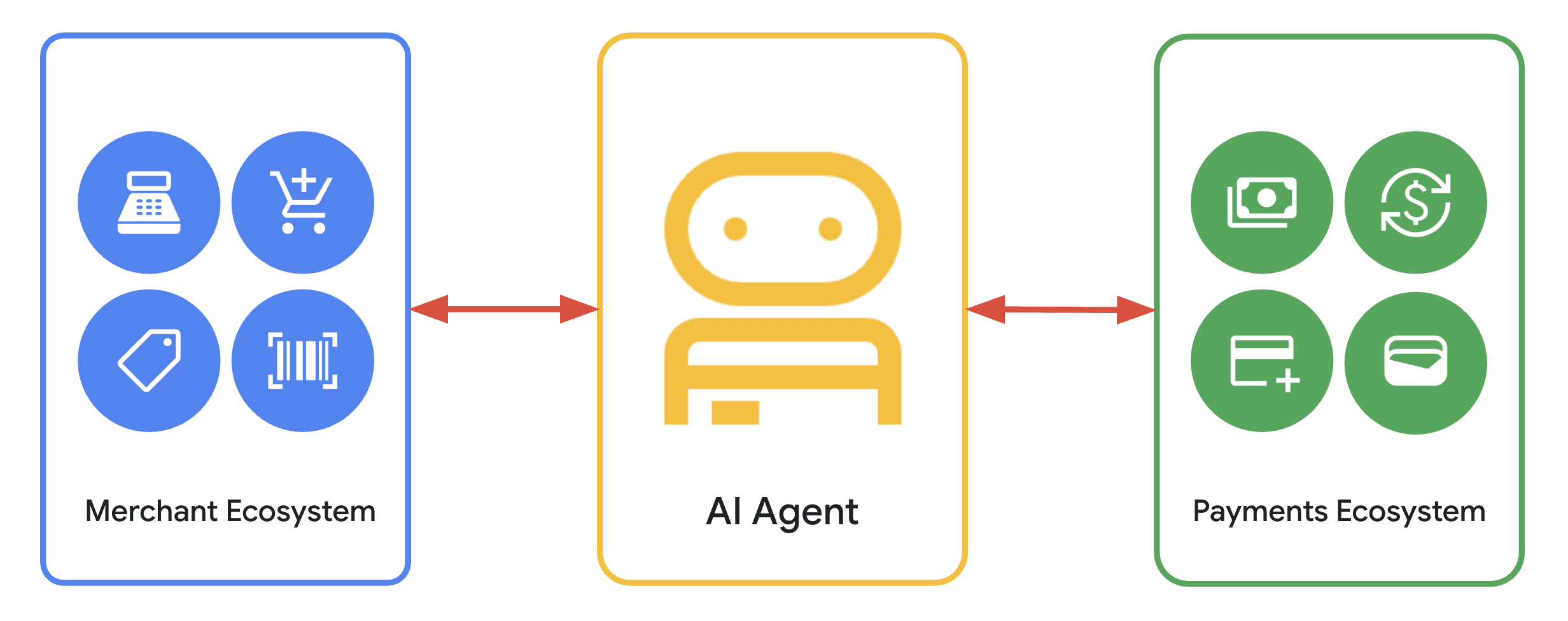
Google’s recent introduction of the Agent Payments Protocol (AP2) and its adoption of the Model Context Protocol (MCP) mark the beginning of this transition toward AI-powered e-commerce.
Especially for WooCommerce, Shopify and Magento merchants, understanding these concepts is no longer just technical trivia; it is the foundation of future business strategy.
This following article explains the new technologies, helping you prepare your business for the agentic AI shopping experience and the rise of machine shoppers.
The Agentic Customer: Understanding the AI Shopping Agent
To understand the tools, one must first understand the user. An AI agent is software that can reason, plan, and execute tasks autonomously. Unlike a passive chatbot that simply answers questions, an agent has “agency”—the ability to browse the web, compare prices, and, crucially, spend money on behalf of users.
In this new paradigm of agentic commerce, your e-commerce store is not just a destination for humans; it is a database for AI shopping agents. This requires a shift in how we optimise our online presence, moving from traditional SEO to Agent Engine Optimisation (AEO), also known as agentic SEO.
What is Agent Engine Optimisation (AEO)?
Traditional Search Engine Optimisation (SEO) is about ranking for keywords to earn a human click. Agent Engine Optimisation (AEO) is about structuring data so an AI can “understand” your product without ambiguity—a critical component of generative engine optimization.
AEO Focus: Logic and purity. (Exact weight, material composition, precise shipping windows, stock levels).
If your product data is trapped in “fluffy” marketing descriptions, an AI shopping agent may bypass your store for a competitor whose data is easier to machine-read. AEO ensures your store is the “path of least resistance” for an AI buyer in the emerging agentic commerce landscape.
The Universal Language: Model Context Protocol (MCP)
If an AI agent is visiting your store, how does it “read” your products? It does not look at your website’s visual theme. It looks for a standardised data stream. This is where the Model Context Protocol (MCP) comes in.
MCP is an open standard, adopted by Google and other tech leaders, that allows AI models to connect directly to data sources (like your e-commerce platform inventory) safely as well as securely—enabling true AI-powered e-commerce interactions.
The Concept of “MCP-UI” in Agentic Commerce
Despite the most disruptive concept for merchants in the agentic commerce era is MCP-UI. Currently, you expect customers to come to your website to shop. With MCP-UI, the “shopping experience” becomes portable through conversational commerce.
The Old Way: You find a pair of boots you like. You copy the link, paste it into the chat, and your friends click it. They are redirected to a browser, have to log in, search for their size, and navigate a 5-step checkout.
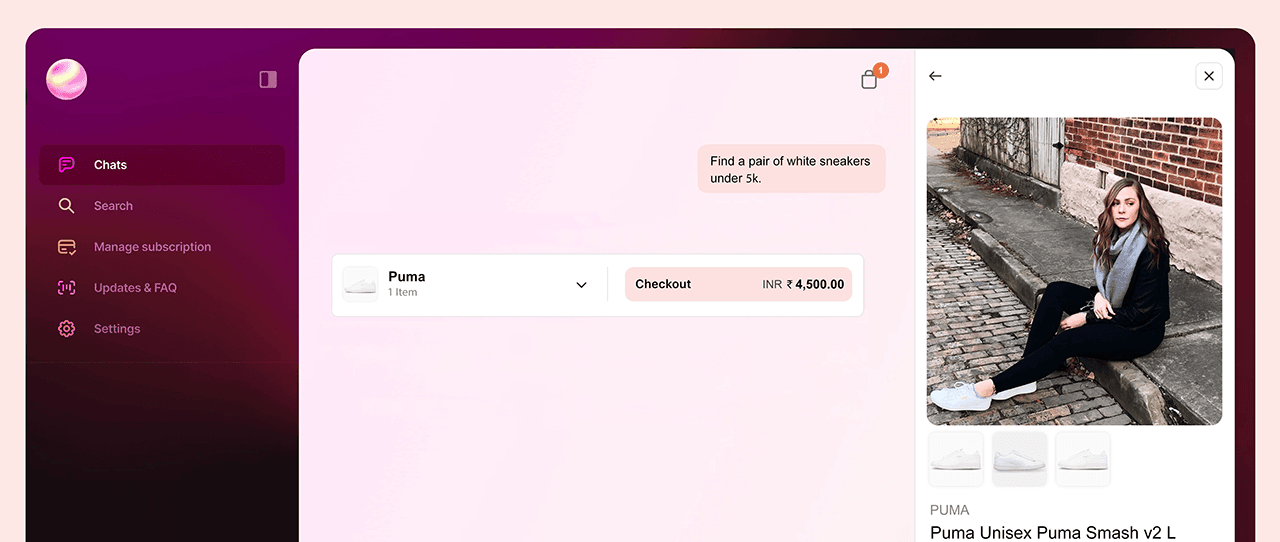
The MCP-UI Way (Agentic Commerce): You drop a line “Find me a pair of white sneakers under 5k.” into the chat. Because the chat app supports MCP-UI, a mini-version of the store’s interface renders directly inside the chat window through conversational commerce.
Imagine you are in a group chat on a platform like WhatsApp or Slack, discussing a hiking trip with friends.
Surprisingly, you or your friends can select their size, see real-time stock, and click “Checkout or Buy Now” using their saved chat credentials—without ever closing the conversation or opening a browser. The AI shopping agent handles the entire transaction seamlessly.
Your e-commerce website is no longer a showcase; it is a set of digital components that travel to the customer, powered by machine shoppers.
The Trust Gap: Google’s Agent Payments Protocol (AP2)
At the heart of agentic commerce is the ‘black box’ nature of complex algorithms. For machine shoppers to spend money at scale, humans must first believe that the underlying logic is not only secure but also consistently aligned with organisational interests and ethical standards.
How does a merchant know a bot is authorised to spend ₹5,000?
How does the user know the bot would not drain their bank account?
Undoubtedly, Google’s solution is the Agent Payments Protocol (AP2)—a cornerstone of secure AI-powered e-commerce.
AP2 is a standard that replaces the traditional credit card checkout form with a system of Cryptographic Mandates. Think of a mandate as a digital, tamper-proof letter of permission.
The Chain of Mandates in Agentic Commerce
The AP2 process works through a secure “handshake” that happens in milliseconds:
The Intent Mandate: Firstly, The human user tells their AI agent, “You are authorised to spend up to ₹5,000 on white sneakers shoes.” This creates a signed digital certificate.
The Cart Mandate: The AI shopping agent browses your e-commerce store, selects the items, and “locks” the price as well as the stock. It creates a secondary certificate linking the specific products to the user’s spending limit.
The Payment Mandate: Finally, the machine shopper presents the completed proof to your payment processor. The funds are released instantly.
Why This Matters for Merchants in Agentic Commerce:
Zero Fraud Liability: Because the mandate is cryptographically signed by the user’s device (e.g., their Google Wallet), it is mathematically impossible for the bot to “go rogue.”
Frictionless Checkout: There are no forms to fill out. The sale happens in the background, drastically reducing cart abandonment—a key benefit of AI-powered e-commerce.
The Agentic Commerce Shift: Optimising for Machine Intelligence
The transition to agentic commerce will not happen overnight, but the infrastructure is being laid now. To ensure your e-commerce business is ready for AI shopping agents and machine shoppers, focus on these three pillars:
Data Purity (AEO): Audit your product catalogue. Ensure attributes like size, colour, and dimensions are stored in structured fields, not just written in the description text. This is essential for agentic SEO and generative engine optimization.
API Readiness: Ensure your store’s REST API is robust. AI agents consume APIs, not HTML pages. Slow APIs will lead to agents “timing out” and abandoning your store.
Payment Evolution: Monitor your payment gateway providers (such as Stripe or PayPal) for updates regarding “AP2 support” or “Agentic Payments.” This functionality will likely be rolled out via plugin updates in the coming year.
Preparing for AI-Powered E-commerce: The Next Step for Your Business
The shift to agentic commerce represents a new revenue channel—one where the customer is logical, efficient, and ready to spend. As AI shopping agents and machine shoppers become the norm, businesses that embrace Agent Engine Optimisation, adopt conversational commerce through MCP-UI, and implement secure payment protocols like AP2 will gain a significant competitive advantage.
The future of retail is not just digital—it’s agentic. The question is not whether AI-powered e-commerce will transform your industry, but whether your business will be ready when agentic AI customers arrive at your digital doorstep.
In today’s digital landscape of endless scrolling and algorithm-driven content, successful brands are not the loudest—they are the clearest. As we move through 2026, businesses must shift from simply being present online to operating with genuine Digital Intent—developing an online presence strategy demands that goes beyond visibility to create meaningful impact.
India is currently at a unique crossroads and being world’s most populous nation with a rapidly digitising economy, yet we face significant challenges in digital literacy, linguistic diversity and “clutter culture” in app design. Therefore, bringing clarity is not just an “aesthetic choice”—it is a functional necessity.
A Return to Purposeful Design
Much like the early 20th-century revolution that stripped away ornamental excess in favour of functional beauty, today’s digital landscape—particularly in India—desperately needs a similar transformation. We are witnessing an overload of decorative elements, cluttered interfaces, and messaging that prioritises flash over function.
The answer lies in embracing form following function: designing with intention, where every element serves a purpose. This philosophy champions:
Clean, uncluttered interfaces that respect the user’s attention
Typography and layout that enhance readability rather than distract
Colour palettes that communicate meaning, not just aesthetic preference
Geometric simplicity that creates visual harmony
In the Indian digital market especially, where businesses often compete through visual excess, adopting this stripped-back, purposeful approach creates immediate differentiation and sophistication. This online presence strategy requires—one rooted in clarity over complexity—sets forward-thinking businesses apart.
The Six Pillars of Digital Intent Strategy
At TheCreatology, we have identified six foundational pillars that transform a basic online presence into a dynamic, high-performing digital asset.
1. Space That Invites: Web Fundamentals
Your website serves as your digital headquarters. To convert visitors into customers, it must deliver:
Artificial Intelligence is not about replacing human connection—it’s about enhancing it:
Automate repetitive tasks like content scheduling and data analysis
Free up time for strategic thinking and creative work
Maintain consistent output without risking burnout
Focus your energy on what truly matters: Genuine Engagement
Key takeaway: Automate the mundane to amplify the meaningful.
The Indian Digital Revolution: Less Is More
Indian businesses face a unique challenge: standing out in a marketplace where visual complexity has become the norm. The revolutionary online presence strategy 2026 calls for involves:
Stripping away the unnecessary: Remove decorative elements that don’t serve user needs
Prioritising clarity: Ensure every design choice enhances understanding
Unifying form and function: Create beauty through purposeful design
Embracing whitespace: Allow content room to breathe and communicate effectively
This shift from ornamental to functional design does not mean sterile or boring—it means intentional, powerful, and memorable.
Staying Active on Social Media Improve Online Presence
Maintaining an active social presence need not be overwhelming. The key is delivering consistent value through:
AI-powered content planning: Use intelligent tools to schedule and optimise posts
Quality over quantity: Share less frequently but with greater purpose
Automated workflows: Streamline routine tasks whilst preserving your authentic voice
Strategic engagement: Allocate saved time to meaningful interactions with your community
Clear, purposeful messaging: Cut through the noise with direct communication
Your 2026 Action Plan
The path forward is refreshingly straightforward: Be Simple. Be Good.
Eliminate unnecessary complexity from your digital presence
Design with purpose: every element should serve a function
Protect your digital assets and customer data rigorously
Leverage AI to amplify your authentic voice
Focus on clarity, consistency, and genuine connection
By building your online presence on these six foundational pillars—guided by principles of functional design and purposeful communication—you transform your digital footprint from a static placeholder into a dynamic asset that works continuously for your business.
The future belongs to brands, brave enough to simplify.